 En
En
Perforated metal sheet professional service company
The selection of a perforated metal supplier often hinges on a simple price quote. But beneath the surface of that quote lies a complex web of variables—material sourcing, tooling costs, lead times, and quality control—that can silently erode project budgets and schedules. Engineers and procurement specialists increasingly find that the true cost of a perforated metal component isn't just the unit price; it's the total cost of ownership, which includes quality deviations, delayed shipments, and fragmented supply chains.
This article dissects the technical and economic realities of sourcing perforated metal, offering a data-driven framework for evaluation. We'll examine why the integration of manufacturing processes—from punching to welding—is the new benchmark for supplier capability, and how direct-from-factory partnerships are redefining value.
The Hidden Costs of Fragmented Sourcing
Traditional supply chains for perforated components are often fragmented. A designer might source perforated sheets from one vendor, then outsource bending to a fabricator, and finally welding to another shop. Each hand-off introduces risk: tolerances can be lost, surface finishes can be damaged during transit, and communication delays can push projects back by weeks.
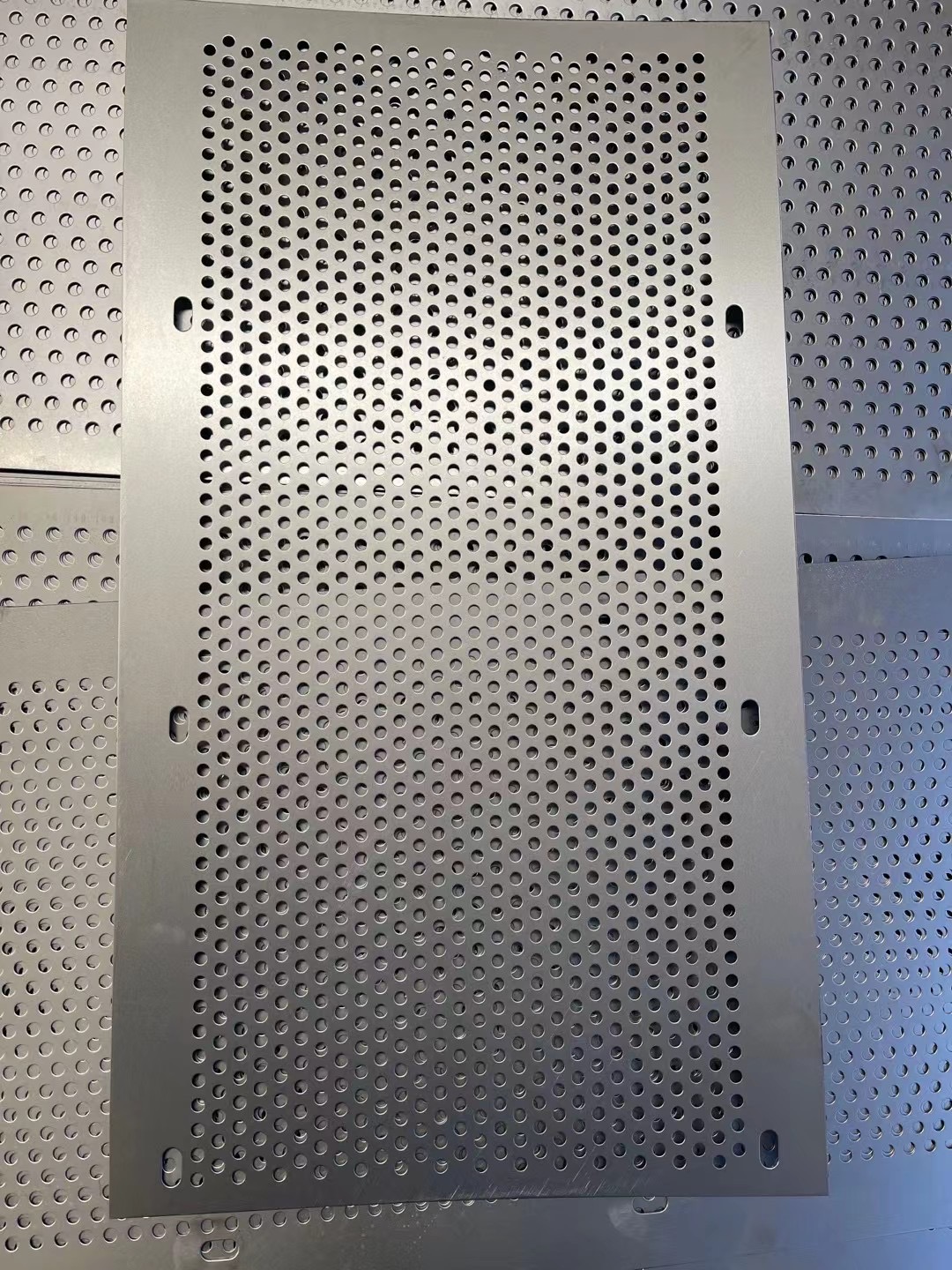
Consider this scenario: a standard order of 500 stainless steel filter screens requires perforating, deburring, and TIG welding. In a fragmented model, the lead time might be 8-10 weeks. With a fully integrated manufacturer, that same order could be completed in 3-4 weeks. The difference lies in production scheduling. When all processes are under one roof, the manufacturer controls the queue. There is no "waiting for the next available slot" at an external shop.
Operational Takeaway: When vetting suppliers, ask directly about their in-house capabilities. A supplier that must outsource welding or bending cannot offer the same delivery guarantees or quality accountability as one that owns the entire process chain.
Technical Precision: The Devil is in the Details
Perforated metal is governed by specific industry standards, typically concerning the nominal diameter of the hole, the center-to-center spacing (pitch), and the percentage of open area. The performance of a perforated panel—whether for acoustic damping, screening, or architectural shading—is directly determined by these factors.
A critical, often overlooked quality is the burr. A poorly deburred sheet can cause injuries during handling, damage downstream tooling, and clog filtration systems. Suppliers like Hengai Metal utilize high-tonnage turret punch presses, which inherently produce cleaner cuts with minimal burr compared to cheaper, older mechanical presses. This reduces the need for secondary finishing and improves the product's lifespan.
Data Point: In a recent high-volume order for architectural ceiling panels, dimensional variance on hole placement was held to within ±0.1mm. This level of precision ensures visual consistency across large installations, eliminating the "patchwork" effect seen when panels have slight pattern shifts. The ability to maintain this tolerance across a production run of 10,000+ sheets is a hallmark of advanced manufacturing capability.
Operational Takeaway: Do not just request a material certificate (MTC). Ask for a dimensional inspection report for the perforation pattern itself. A reputable terminal factory will have the metrology equipment to provide this documentation, proving their commitment to precision.
Material Science: Matching Alloys to Performance
Not all perforated sheets are created equal. The substrate material is your first defense against corrosion, fatigue, and wear.
Stainless Steel (304/316): For environments demanding high corrosion resistance—food processing, chemical filtration, and coastal architectural facades.Aluminum: The go-to for lightweight applications, RF shielding, and anodized architectural finishes, offering excellent strength-to-weight ratios.
Carbon Steel & Galvanized Steel: The economical choice for industrial screening, mining, and ventilation, where abrasion resistance is optimized through material thickness.
Copper & Titanium: Specialty metals for marine environments or premium design aesthetics.
A key value-add from a professional supplier is material substitution guidance. Often, a client will specify a 316L stainless grade out of habit. An experienced manufacturer can analyze the application—perhaps the environment is a dry, interior HVAC system—and suggest a lower-cost 304 or even pre-painted carbon steel, achieving a 20-30% cost reduction without compromising performance.
Operational Takeaway: Share your application environment (pH levels, moisture, temperature, UV exposure) with your supplier, not just your material spec. This collaborative approach can unlock significant savings and improve product longevity.
The Versatility of Tooling and Hole Patterns
The true test of a supplier's versatility lies in their tooling library and ability to handle custom patterns.
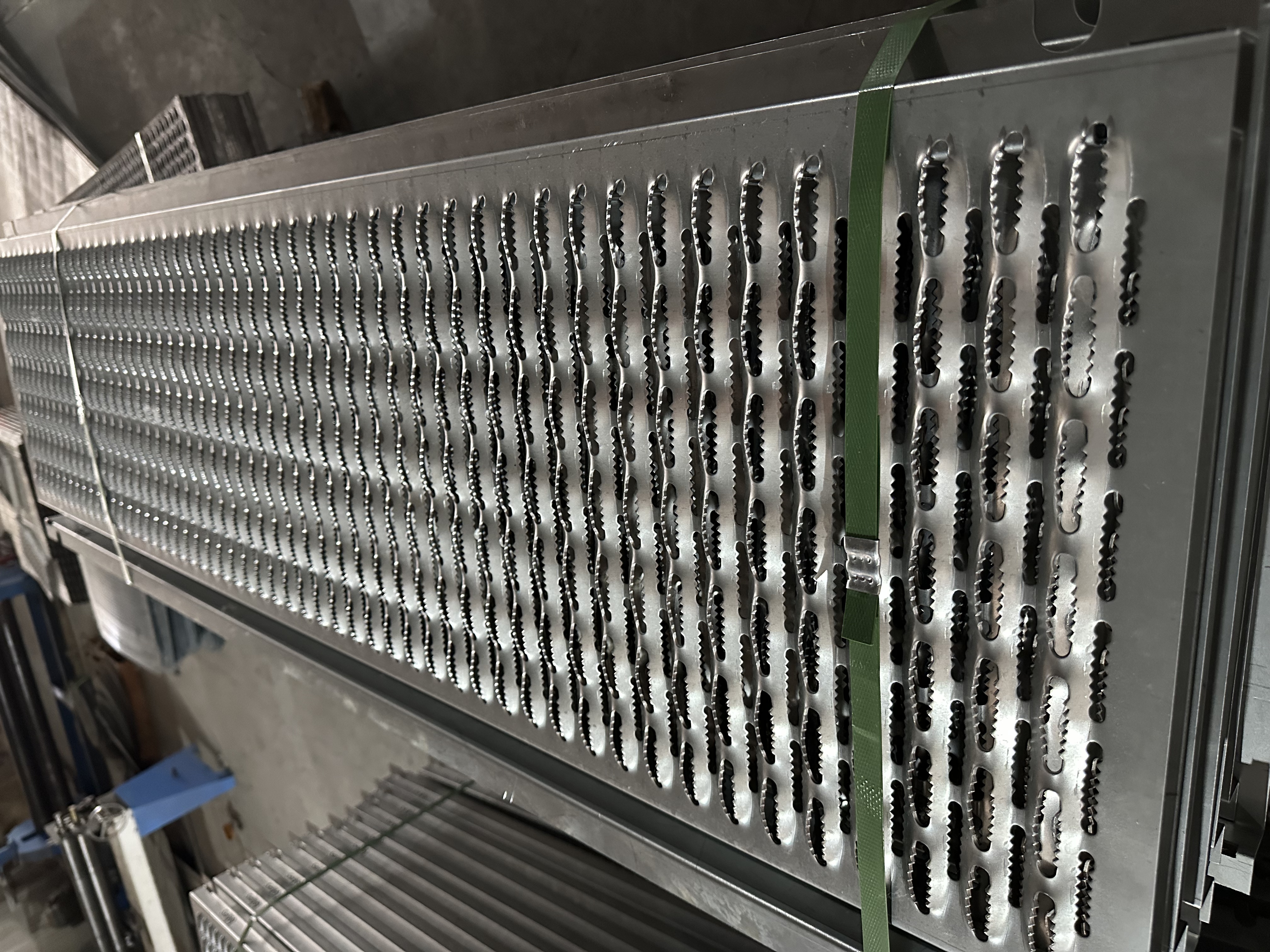
Standard patterns (round, square, slot) are common. But full-service manufacturers maintain an inventory of hundreds of custom tool sets for architectural patterns—dimpled, conical, or louvered. This eliminates the high cost of custom tooling for clients, reducing minimum order quantities and accelerating prototyping.
Hengai Metal’s capabilities include manufacturing micro-perforated sheets for acoustic control (hole diameters under 0.8mm) while also handling heavy-gauge structural screens with hole diameters over 100mm. The flexibility to work within such contrasting parameters demonstrates a robust understanding of press dynamics—small holes require precise punch alignment; large holes require massive tonnage. A one-size-fits-all press line cannot handle this spectrum efficiently.
Further enhancing their value proposition is their capacity for deep drawing and fabrication. By integrating punching with CNC bending and welding, they move beyond flat sheets. This allows for the production of complex components like filter cylinders, fan guards, and machine housings as a single, turnkey unit. This consolidation saves the client from managing a complex multi-vendor supply chain.
Operational Takeaway: When requesting a quote, provide not just the hole size but also the application context (e.g., "acoustic damping for a generator enclosure"). This information enables the supplier to suggest an optimal open area percentage, which directly impacts the acoustic performance.
Cost Analysis: Beyond the Unit Price
When comparing quotes, be wary of aggressive low bids. Prices that seem too good to be true often indicate a reliance on lower-grade raw materials or a manipulation of thickness tolerances.
Thickness Tolerances: A standard 1.5mm sheet may be supplied from a mill at a negative tolerance (e.g., 1.4mm). While this saves the manufacturer money, it reduces the structural integrity of the final product. A trusted factory will purchase from certified mills and can verify coil thickness specifications to substantiate their pricing.Scrap Value: In the perforation industry, scrap (the material punched out) is a significant economic factor. A highly efficient manufacturer has optimized nesting software to minimize the gap between parts and the sheet edges, reducing the "open area" that ends up as scrap. This efficiency is internalized, potentially leading to more competitive pricing for the client without sacrificing profit margin.
Operational Takeaway: Guarantee your price includes the correct material gauge. Request a guaranteed maximum thickness variance in your purchase order terms. Don't just compare the price per sheet; compare the price per kilogram of finished product against the specified performance standard.
Surface Treatment and Finishing
The last line of defense against corrosion is the surface finish. Most perforated metals require post-processing.
Hot-Dip Galvanizing: Strong, durable, cost-effective for carbon steel. Balances corrosion protection with industrial aesthetics.Powder Coating (Polyester/Epoxy): Offers excellent UV resistance and color stability. Outstanding for architectural projects, with thicknesses controlled at 60-80 microns.
Anodizing: For aluminum, it creates a hard, non-conductive layer that is an integral part of the aluminum, offering superior adhesion and wear resistance.
Hengai Metal handles all these finishing processes in coordination with their punching schedules. This synchronization ensures two key benefits: first, they can cap the sharp edges of the holes effectively; second, there is no risk of the coating bridging and closing off micro-perforations, a common defect in poorly managed outsourced coating.
Operational Takeaway: For components with micro-perforation (under 1mm), ask the supplier how they manage the coating process to prevent the blocking of holes. Ask about their "de-dusting" and pre-treatment line quality to ensure the coating adheres properly to the cut edges.
Conclusion: The Value of a Strategic Partner
The decision to source perforated metal should be strategic, not transactional. Choosing a partner like Tianjin Hengai Metal Product Co., Ltd.—a terminal factory with comprehensive process control from coil to finished assembly—provides a distinct competitive edge. They offer:
Quality Assurance: Consistent metallurgy and precise dimensions, backed by internal inspection.Speed to Market: Streamlined lead times with in-house production and finishing.
Cost Efficiency: Elimination of middleman markups and cross-vendor logistics costs.
Innovation Support: Professional insights to help refine designs for manufacturability and cost reduction.
By prioritizing total capability over unit cost, you mitigate supply chain risks and ensure that your project—whether a skyscraper facade, a mining screen, or a pharmaceutical filter housing—is built on a foundation of technical integrity and professional reliability. The direct factory model is not just a trend but a solution to the systemic market pains of opacity and inconsistency, ensuring that your project sees success from concept to completion.