 En
En
Perforated metal sheet superior quality options
In industries ranging from architectural facades to mining screens and filtration systems, perforated metal is the quiet workhorse. Yet, the market is fragmented. Buyers often face a frustrating choice: pay premium prices to large manufacturers or risk quality issues with small workshops.
The reality is that the gap between "expensive" and "good" is wider than most procurement managers think. Based on production data and industry feedback, here is a practical guide to sourcing superior quality perforated metal sheets, with a focus on cost-effective strategies that do not compromise on standards.
1. Understand What "Superior Quality" Actually Means
Quality in perforated metal is not a single attribute; it is a combination of four measurable factors. Misunderstanding these leads to incorrect purchases.
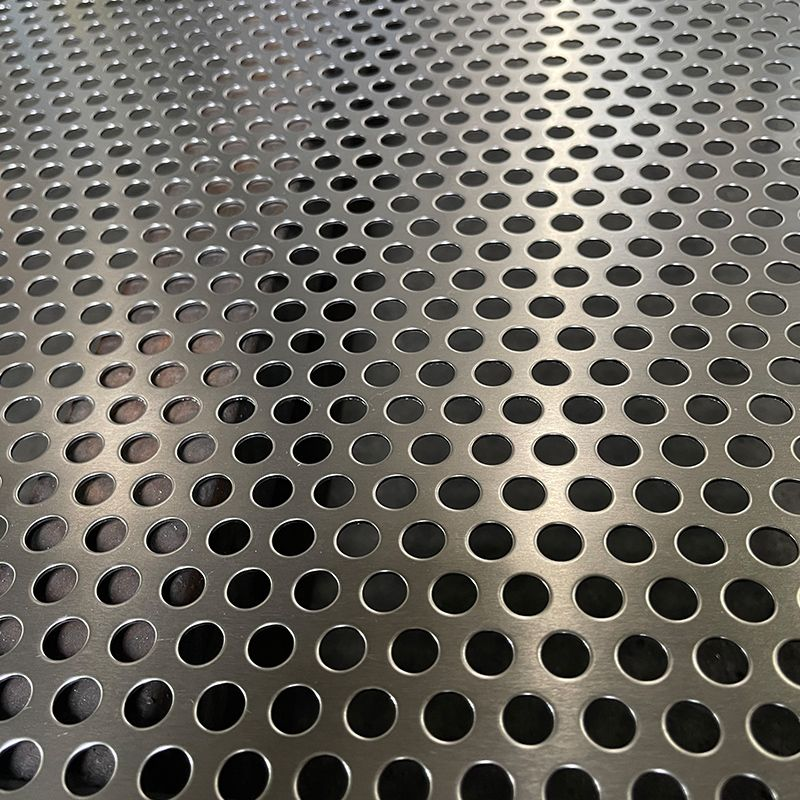
Dimensional Accuracy: This involves hole diameter, pitch (center-to-center distance), and sheet flatness. A tolerance of ±0.1mm is often the industry standard, but superior products maintain this consistently across a large batch.Burr Management: Improper tooling leaves sharp burrs on the underside. This is a safety hazard and causes coating failure. High-quality sheets require precise die alignment or a secondary deburring process.
Material Integrity: The punching process work-hardens the metal edges. Cracking is a risk, especially in high-carbon or certain stainless steels. Quality producers select the correct material grade for the hole size and pattern.
Consistency of Open Area: The percentage of open area affects airflow, visibility, and screening efficiency. If the pattern distorts under stress, the functional performance drops.
Practical Advice:Do not rely solely on a sample. Request a pre-production sample from the actual production line. For large orders, ask for a "first article inspection" report against your 2D drawings, not just a general spec sheet.
2. The Hidden Cost of the "Middleman" Trap
The perforated metal supply chain is notoriously long. A typical order often passes through a steel service center, a punching contractor, and then a fabrication shop for bending or welding. Each step adds a margin of 10-15%, and more importantly, each transfer points fingers when quality issues arise.
Our experience at Hengai Metal shows that the most efficient and reliable model is the terminal factory concept. We handle the material sourcing, punching, cutting, bending, welding, and surface treatment under one roof. This is not just about cost; it is about accountability.
For example, in a recent project for an industrial filtration housing, a client initially sourced sheets from one supplier and had them welded by another. The tolerance stacking between the two vendors led to a 30% rejection rate during final assembly. When we took over the entire process, managing the flat pattern and the welding jig together, the scrap rate dropped to under 2%.
Practical Advice:When evaluating suppliers, ask directly: "Do you own the punching machines and the welding equipment?" If the answer is "we outsource," analyze the risk. Single-source responsibility is often worth a premium, but with a true terminal factory, you usually don't have to pay one.
3. Matching the Material to the Application
Selecting the material is the most critical cost driver. A common mistake is over-specifying the metal, leading to unnecessary expenses.
Architectural & Facades: Aluminum or Stainless Steel 304 are common. Aluminum offers lightweight properties and corrosion resistance, but it is softer and more prone to dents. Stainless Steel provides strength and a premium finish but is heavier and costlier. For coastal areas, 316 stainless steel is often required due to chloride exposure.Mining & Heavy Screening: Carbon Steel or Manganese Steel are typically used for their abrasion resistance. The key is to balance hardness with the brittleness of the hole bridge. We often see clients select a very thick plate, which is unnecessary and heavy. Optimizing the hole shape (e.g., using slotted holes instead of round) can increase wear life without increasing thickness.
Filtration & Food Processing: Stainless Steel is the standard for hygiene. The critical factor here is the finish. A smooth, non-porous surface prevents bacterial growth. Ensure the punching process does not create micro-tears where bacteria can harbor.
Practical Advice:Provide the supplier with the application environment (temperature, chemicals, abrasives) rather than just a material grade. A specialized manufacturer like Hengai Metal can recommend a cheaper, more formable material if the environment permits, or advise on specialized alloys when standard options fail.
4. The 70% Cost Reduction in Deep Processing
Many buyers purchase flat perforated sheets and then send them to another shop for bending, rolling, or welding. This is inefficient. The logistics of moving large, delicate sheets are costly, and handling damage is common.
The value of integrated manufacturing cannot be overstated. If you need a filter drum, a ventilator guard, or a acoustic panel, buy the finished component.
Reduced Waste: The fabricator can nest the flat pattern to minimize offal, something impossible if you buy standard sheets first.Faster Turnaround: Eliminating the transfer between shops cuts lead times by weeks.
Better Quality Control: The supplier controls the spring-back in bending and the distortion from welding, which often warps the perforated area.
Practical Advice:Send your full assembly drawing. Ask if the supplier can provide a turnkey solution. At Hengai Metal, we often produce components that are ready for paint or installation. This requires a supplier with CNC punching, laser cutting, and skilled welders, but it dramatically simplifies your supply chain.
5. Make Small Orders Work for You
A significant pain point in the industry is the treatment of small orders. Large mills and trading companies often reject orders under a certain quantity, or they quote exorbitant prices for "tooling changes." This prevents you from prototyping and scaling.
Superior suppliers view small orders as engineering samples. A run of 50 pieces allows us to validate the tooling, test the material, and identify potential production bottlenecks before a large order is placed.
In one instance, a client needed 20 custom filters for a pilot test. A large manufacturer quoted a price 4 times higher than the expected mass-production cost and demanded a 6-week lead time. We were able to produce the 20 units using flexible tooling within 10 days. This allowed the client to test their system, secure funding, and then scale the order to 5,000 units with the same tooling—now optimized based on the pilot run’s feedback.
Practical Advice:Do not hide your small orders. Use them as a test for the supplier. Evaluate their communication, their willingness to provide technical input, and their adherence to the deadline. A supplier who treats your 20-piece prototype with the same seriousness as a 20,000-piece order is a partner worth keeping.
6. Quality Verification: Data over Anecdotes
When your parts arrive, do not just check the exterior. A perforated sheet can look perfect on top but be out of spec on the hole pattern or thickness.
The 3-Point Check:
The Micrometer Test: Do not assume the actual material thickness matches the nominal. The cost of steel fluctuates, and some suppliers reduce thickness. Check the edge with a micrometer to verify the gauge.The Pattern Count: Count the number of holes in a 10cm section. Calculate the actual pitch (center-to-center distance). A slight error in the CNC program can produce a pattern that does not align with your secondary tooling.
The Flatness Gate: Lay the sheet on a perfectly flat surface. Check for "oil canning" or waviness. This usually happens when the punching process is too aggressive for the material thickness and the sheet is not stress-relieved.
Practical Advice:Ask your supplier for the in-process inspection report. At Hengai Metal, we provide dimensional checks at the punching stage, post-forming checks, and a final visual inspection. Asking for this data builds a quality culture. If the supplier hesitates to share data, that is a red flag.
7. Long-Term Partnership Over One-Off Deals
The most cost-effective way to buy perforated metal is through a long-term supply agreement. This allows the manufacturer to plan raw material purchases in bulk, lock in prices, and optimize production schedules.
We have clients who send us a 12-month forecast. We purchase the raw coils in bulk, which reduces material costs. We pass a portion of these savings back to the client, while securing a stable demand for our machines. This creates a win-win scenario that is impossible in a spot-market transaction.
Practical Advice:Negotiate a call-off contract. Agree on a fixed price for a certain volume over a year, but allow for flexible monthly releases. This gives you price certainty for your budgeting, but the flexibility to adapt to your own production swings.
Final Thoughts
The best perforated metal sheet is not just the one with the tightest tolerances on paper; it is the one that meets your application needs reliably and at the lowest total cost of ownership. By focusing on the supplier’s manufacturing capabilities, their willingness to handle prototypes, and their ability to manage the entire fabrication process, you can achieve superior quality without the premium markup. The key is to find a partner who sees the sheet as part of a larger solution, not just a commodity to be sold.