 En
En
Perforated metal sheet quality comparison
When a project stalls or a production line stops, the culprit is often a seemingly simple component: the perforated metal sheet. It might be a filter housing that corroded prematurely, a screen panel that failed under load, or a batch of decorative panels with inconsistent hole alignment.

Choosing the right supplier isn't just about comparing price lists. It's about understanding where quality is actually determined—and where it gets lost. Here’s a field-guide comparison based on what separates a reliable perforated metal manufacturer from a middleman, with a focus on what you should inspect before committing.
1. The Unseen Factor: Vertical Integration vs. Multi-Layer Outsourcing
The most significant quality differentiator isn’t visible on the surface of the sheet. It’s in the production flow. Many suppliers act as trading companies or assemblers. They purchase flat sheets from one mill, send them to a subcontractor for punching, then to another shop for bending or welding. At each transfer, tolerances drift.
| Factor | Multi-Layer Outsourcing Model | Vertically Integrated Factory (e.g., Hengai Metal) |
|---|---|---|
| Tolerance Control | Risk of cumulative errors across multiple vendors | All processes (punching, cutting, bending, welding) under one roof, ensuring consistent dimensional accuracy |
| Defect Traceability | Difficult to pinpoint which stage caused a defect (e.g., burrs or warping) | Full traceability from raw coil to finished part; quality checks at each internal stage |
| Lead Time | Extended due to scheduling conflicts between different suppliers | Controlled scheduling; urgent orders can be accommodated by adjusting internal priorities |
| Communication | Information is relayed through multiple parties, leading to misinterpretation | Direct communication between the engineering team and the production floor |
Opinion: In my experience, the "cheapest" quote often comes from a trader who has optimized logistics, not production. You end up paying for their coordination errors with your own project delays. A factory like Hengai Metal, which owns laser cutters, turret punch presses, and welding equipment, can lock down quality at the source.
Actionable Advice: When vetting a supplier, ask for a production flow chart. Ask them to specify which steps (punching, bending, welding, surface treatment) are done in-house versus subcontracted. If more than 20% of the critical steps are outsourced, ask for their quality control plan for those specific external vendors.
2. Real-World Case: How "Cheap" Became Costly in Mining Screens
A mining operator in South America sourced perforated screens from a low-cost supplier. The initial quote was 15% below market average. However, field data over a six-month period painted a different picture:
Failure Rate: 12% of the screens experienced premature cracking at the hole edge due to poor burr removal and micro-fractures from dull tooling.Downtime: Each screen replacement required 4 hours of downtime. With 150 screens in operation, this translated to 7,200 hours of lost production.
Actual Cost: When factoring in lost production time and replacement logistics, the "cheap" screens ended up costing 2.3x more than a premium product.
What happened? The supplier had used a lower-grade steel and hadn't optimized the punch clearance for the specific material hardness. The holes were clean initially, but stress points remained, leading to failure under vibration.
The Solution: The client switched to a manufacturer that provided a comprehensive material consultation. For abrasive environments, they needed a product with specific hardness and impact resistance. A switch from standard mild steel to a specialized carbon steel, with a revised hole pattern to reduce stress concentration, extended screen life from 3 months (for the cheap version) to 11 months.
Actionable Advice: For industrial applications (mining, filtration), never evaluate a sample only by its visual appearance. Request the material test certificate (MTC). Ask the supplier how they manage the trade-off between open area (for screening efficiency) and structural strength. A manufacturer with engineering support will be able to analyze this with you, rather than just confirming you a price.
3. Deep Dive: Surface Finish and Corrosion Resistance is More Than Skin Deep
The primary role of a perforated sheet is often functional, but its longevity depends on its surface treatment. A galvanized sheet that shows rust after six months in a coastal environment has failed, regardless of its tensile strength.
Here’s a comparison of what to expect:
Hengai Metal's Approach: They offer a full suite of surface treatments, including hot-dip galvanizing, powder coating, anodizing, and passivation. Because they are a factory, they can handle the entire process. The key advantage is that they will recommend a specific finish based on the environment—e.g., powder coating for architectural aesthetics, anodizing for aluminum in humid climates, and passivation for stainless steel in food processing.
The Typical Trader's Approach: The trader will usually offer a "standard" finish at an inflated price or a "cheap" finish of inconsistent quality. They often cannot control the thickness of the coating because the third-party treatment shop prioritizes its own turnaround over your specification.
Opinion: The most frequent complaint clients have isn't about the hole pattern, but about edge burrs and surface scratches that occur during the final stages of handling. A factory that controls its own finishing line is less likely to scratch the material because its handling protocols are designed for the finished product, not for quick shipping.
Actionable Advice:
Specify a Burr Standard: Burr height should be specified. For most applications, a burr height of less than 0.1mm is acceptable, but for filter applications, it must be zero—the holes must be perfectly smooth to prevent particle entrapment.**Salt Spray Test: For outdoor architectural or marine use, ask for documentation of a 72-hour or 96-hour salt spray test, depending on the environment.
4. The "Small Order" Trap: Testing the Supplier's Flexibility
I have seen many engineering projects get stuck at the prototyping stage because the manufacturer requires a minimum order quantity (MOQ) of 500 sheets. For an R&D team, this is a significant financial risk.
| Supplier Type | MOQ Flexibility | Prototype Speed | Customization Support |
|---|---|---|---|
| Large Mass-Production Mill | Very high MOQ, not interested in small trials | Slow; fits into their fixed cycle | Limited to standard patterns |
| Trading Company | Can be low, but unit price is high, and quality varies | Medium; reliant on their own factory's availability | Limited to their supplier's capabilities |
| Hengai Metal (Terminal Factory) | Supports small batch trial orders (dozens of pieces) | Fast; can slot small jobs into existing production gaps | Supports OEM/ODM, custom hole shapes, and material selection |
The Risk with Large Mills: If you order a small batch of custom-perforated parts from a huge manufacturer, your requirements are a distress signal to their system. They will likely produce it, but they won't pay extra attention to the details, because you're a fraction of their revenue.
The Advantage of a Terminal Factory: A factory like Hengai Metal builds its reputation on customization. They offer "from dozens to thousands of pieces." This flexibility means that when you start a small trial, you are a priority, not a nuisance. They can quickly test tooling and provide feedback on the feasibility of your hole pattern before you commit to volume.
Actionable Advice: Use the "small order test" as a quality gate. If a supplier delivers a flawless prototype in a short timeframe (e.g., 5-7 days) with clear communication, the volume performance is likely to be reliable. If the prototype is late or arrives with rough edges, the larger order is guaranteed to be a disaster. Look for partners who are eager to solve your engineering problem with you.
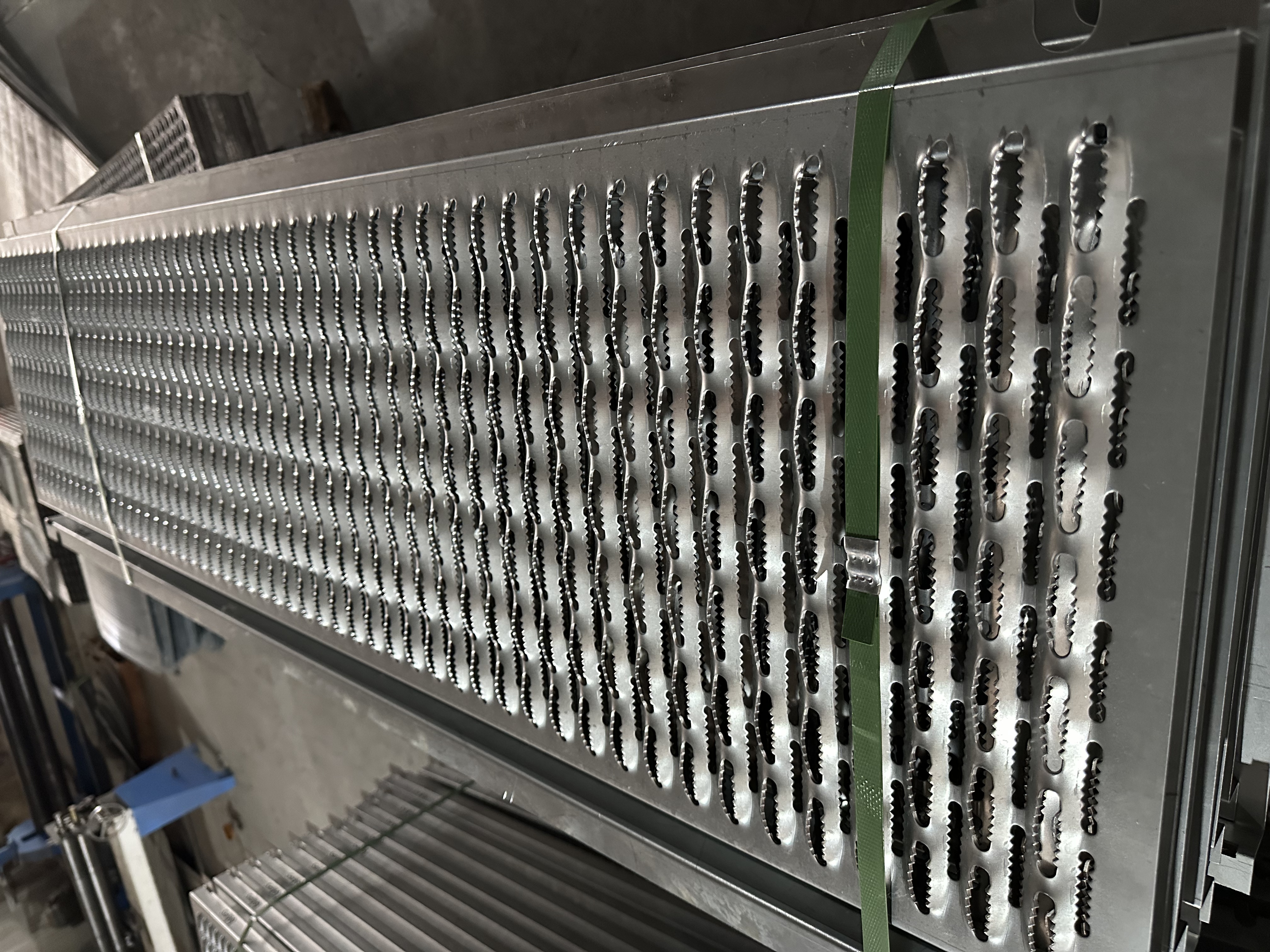
5. Conclusion: The Decision Matrix
Quality is a system, not a spec. You aren't just buying a piece of metal with holes. You are buying a guarantee of performance, a timeline, and a partnership for problem-solving.
| Non-Negotiable Quality Indicator | Why It Matters |
|---|---|
| In-House Production Capabilities | Direct control over tolerance and scheduling. |
| Material Selection Support | The right material for the application saves 50% of future headaches. |
| Sampling Speed | Reflects whether the factory is agile or bureaucratic. |
| Transparent Tooling Fees | Separates a serious partner from a speculative trader. |
| Surface Treatment Control | Prevents premature failure and ensures longevity. |
My Take: The market is full of suppliers who can punch holes. But the critical distinction lies in the engineering know-how behind the tooling and the integrity to control the whole process. Don't shortlist suppliers based on their website. Ask them to explain their process for deburring. Ask them to explain why their specific punch-to-die clearance is optimal for your material. If they can answer with knowledge and confidence, you've likely found a partner that will ensure your project's success.
Final Word: When in doubt, visit the factory. If you can’t visit, request a video walkthrough of the production floor. The sound of a well-maintained press is very different from a rattling, poorly-maintained machine. See how finished parts are stacked and separated. Careful handling, careful stacking—this is the difference between a premium sheet and a scrap-yard reject. Look for a partner who is as obsessed with the process as you are with the final application.