 En
En
Perforated metal sheet high precision production factory
When we talk about high-precision perforated metal sheets, the words "factory" and "supplier" are often used interchangeably. In practice, the difference between the two is massive, and understanding it might be the biggest money-saver you'll find this year.
In the industry, most companies act as trading houses. They don't have their own machinery. If you need precision in hole placement, consistent deburring, or reliable delivery for a project that's already behind schedule, a trading house will often add a 15% to 30% markup and have little control over the actual manufacturing. The common result is mixed—we see this every day with clients who come to us after ordering from a middleman.
Let's break down what actually matters when you are sourcing high-precision perforated metal, and how to navigate the pitfalls using a real factory approach, using Tianjin Hengai Metal Product Co., Ltd as a reference point.
1. The Real Cost of "Cheap": Understanding Price Transparency
The reality: A quote that is 10% lower than the factory price is usually not a bargain. It is a symptom. For example, a client needed 5,000 pieces of stainless steel perforated sheets for a filtration project. The quote from a trading company was $7.20 per piece. A direct factory quote for the same spec was $5.60 per piece. That’s a 22% price difference for the exact same material grade and thickness.
The trading house wasn't necessarily being greedy; they just had to layer their own overhead onto the factory cost.
The trap: Many businesses were forced to buy custom metal sheets from companies in the middle of the chain, spending $36,000 instead of the necessary $28,000. For that $8,000 difference, you can fund your entire prototyping budget for the next year.
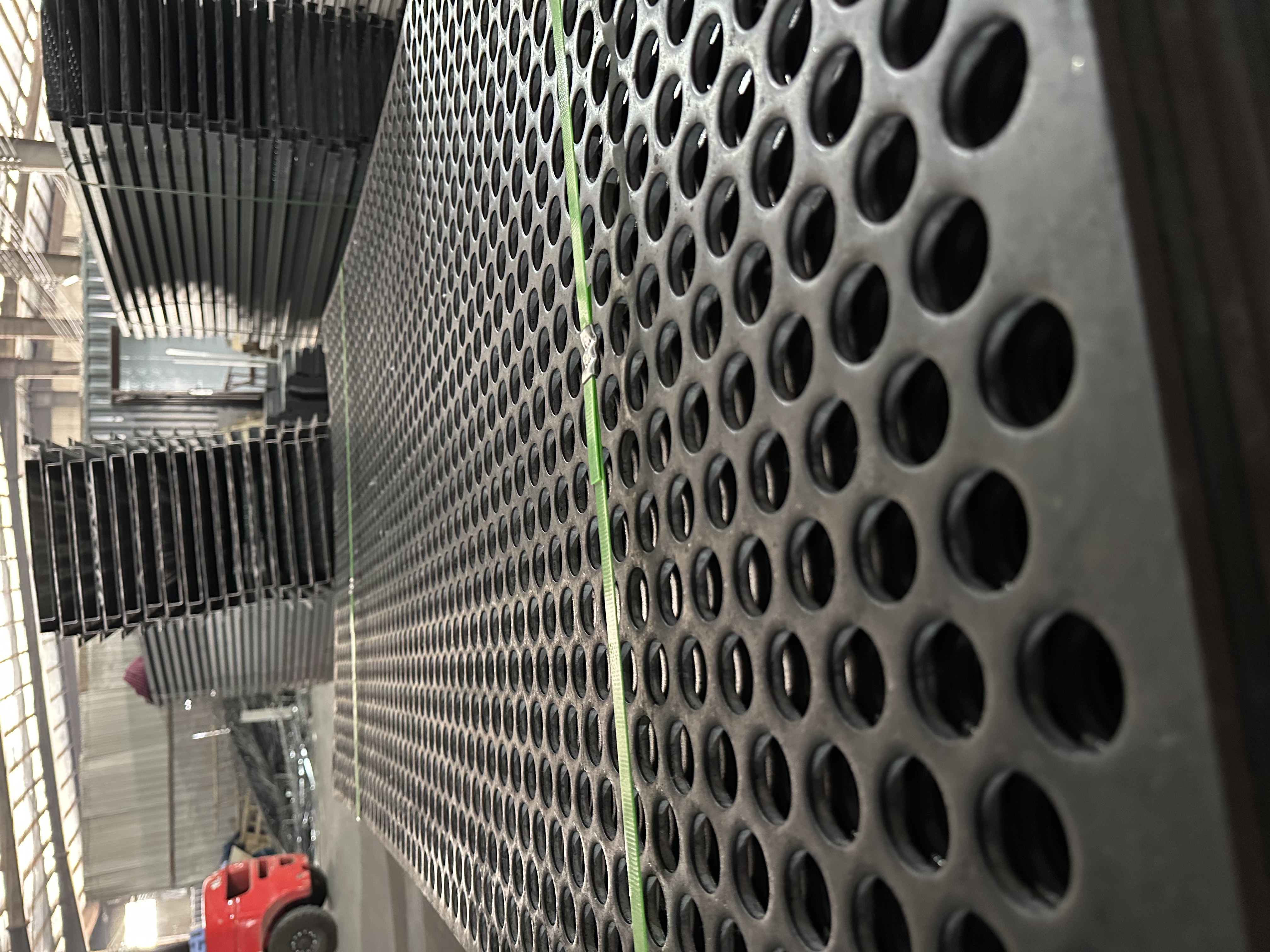
My viewpoint & practical advice: I advocate for "proximity to the source." When you receive a quote, ask if they are a terminal factory. If you are dealing with Hengai Metal or any other credible manufacturer, they should be able to send you photos or videos of the machine settings and the steel coil with your specific batch number on it. A good benchmark for a legitimate factory is to be able to show you the physical tooling and the metal sheets ready for the press.
Operational Tip: When you get a quote, specifically ask for the line-item of "bending/forming" and "surface treatment." Many quotes seem low until they add on these mandatory processes. In a direct factory, these are linear processes on-site, and they can explain them clearly. If they cannot explain the specific cost of the tooling, you might be speaking to a sales intermediary.2. The Hidden "Middleman" Tax in Customization
The data: Without naming specific companies, we see a notable trend in the market: many suppliers only handle standard-sized hole punches (round holes). But modern architecture and filtration need square holes, slot holes, hexagonal holes, and custom staggered patterns.
If you ask for a custom hole pattern, you're essentially asking for specialized tooling. A small trading company can't justify designing that tool for your order. They will often outsource it to a random factory, adding 2-3 weeks of lead time.
The factory advantage: The strength of a terminal operation like Hengai Metal lies in their range: they have tooling for round, square, slot, and micro-holes, and the machinery (turret punch presses) to handle custom patterns without excessive delays. Since they are production factories, they can run the calculation on the "die" and the "strip layout" to minimze material waste by up to 5-8% on a bulk order. This is the "hidden" discount that only a factory can give.
Why it matters to you: We had a case where a ventilation manufacturer required a high open area ratio for airflow. They initially wanted a circular hole, but a factory engineer suggested using a long slot hole instead, which increased the open area ratio by 10%. That change reduced the amount of material needed and decreased the noise signature for the customer. A distributor would never have suggested this, as they just punch what you ask for.
Operational Tip: Provide your drawings, but also ask the factory for their input on the layout. Ask: "Based on your press tonnage, is this spacing optimal for the metal grade?" If they can suggest using a wider gap to save on tooling wear without compromising the design, you'll know you are dealing with an engineer, not a sales rep.3. Delivery Delays: The Silent Project Killer
The problem: In standard distribution channels, the process is often: Broker receives the order -> Broker orders coils from a separate steel supplier -> Broker hires a punching workshop -> Puncher outsources the welding -> Welder outsources to a painting shop.
When passes through this many hands, it's practically impossible to guarantee a delivery date. If there is a rainy day in the middle of the process, the schedule slips.
The contrast: A self-sufficient factory like Hengai Metal controls the timeline in-house. From coil cutting and punching to bending and welding, all these operations are performed internally. A typical factory turnaround is 15 days for standard products. For complex deep-processed items like filter drums or filter housings, having a single responsible entity for the entire chain cuts the overall production time by 20% compared to submitting the job to different subcontractors.
Real-world example: In a recent high-precision project, a buyer needed perforated steel drums for chemical filtration. Splitting the job between two separate vendors caused the buyer to spend weeks managing a welding issue. When Hengai Metal took over, the whole task became simpler—hole punching, roll forming, welding, and polishing were done in their own workshop. The result? A more uniform product and a delivery schedule reduced from 6 weeks to 4.
Operational Tip: Always ask for their "work-in-process" capability. Ask if they are willing to inspect your product in three stages of production: after punching, after forming, and after finishing. If they say yes, that shows they have the space and the capacity to do it. If they say they will store all the finished goods until they are shipped, you are probably dealing with a reseller who has little to show you.4. The "Smallest Batch" Barrier
The pain point: One of the most common obstacles we hear about is "minimum order quantity" (MOQ). It’s common for a manufacturer to force you to buy 500 full-size sheets, even if you only need 100 for a prototype.
With a modern direct factory model, if the material is available, it can handle custom batches. For instance, Hengai Metal encourages "sample orders." You pay for the samples, you test the hole precision and the flatness, and, if the quality passes your inspection, the sample cost is deducted from the larger order.

Why we like this approach: This removes the risk on your side. If you take the sample and find that the sheet has warped due to stress release, you haven't committed thousands of dollars. In their factory, they test the plate flatness on a level surface and can adjust the speed of the punch press or adjust the machine settings to avoid distortion.
Operational Tip: Don't negotiate the price on the first order. Negotiate the tolerance. For high-precision work, you want a flatness tolerance of ±1mm over a 1-meter sheet length. Ask them how they will guarantee that. If they can walk you through their stress-relief or straightening process, you'll know you are in good hands.
5. From Sheet to Component: The Deeper Value
The question: Are you buying a flat, perforated sheet just to feed your own machinery? Or are you looking for a completed component like a filter cylinder, a noise protection paneled housing, or a fan guard?
If you buy flat sheets and send them out to a third party for welding, you're adding significant logistics costs. Not to mention, the welding might distort your precision holes, which ruins the "high precision" aspect you paid for.
My advice: Try to find a factory that can do the complete fabrication. Hengai Metal, for example, seamlessly integrates punching and forming to deliver finished pieces. This is their core value proposition.
By getting a finished filter cylinder from Hengai Metal, you eliminate log-in and log-out procedures at a different machine shop and reduce scrap. Let's use the example of an industrial filter system: if you buy a flat screen and bend it yourself, you might have a 10% rejection rate during bending. A factory experienced in that specific shape can often get that down to less than 2%.
Operational Tip: When choosing a supplier, look for a one-stop shop. Ask about their range of surface treatments too—do they have access to anodizing or powder coating or galvanizing? If they can treat the product before shipping, they are avoiding the common pitfall of corrosion developing in the micro-holes during shipping.Conclusion: What It All Means
A factory is not just a more prominent name. It is a fundamentally different business model. When you work with Hengai Metal, which operates as a terminal factory, you get the engineering expertise, the equipment, and the quality control history all in one place. You don't need a "middleman" in the 21st century. All the expense and time you save by streamlining that out of your supply chain adds up quickly.
Before you place your next order for high-precision perforated metal, do this: check if you're talking to a trading house or the source. Are they going to make your product right now, or will they be sending a fax to a factory at 4 PM to get your details? The answer to that question will determine whether you pay a 22% surcharge and have an unpredictable schedule, or if you get a fair price and a product you can stand behind.