 En
En
Perforated metal sheet leading manufacturer
In industrial procurement, the difference between a smooth project and a costly disaster often comes down to one thing: the supplier behind your materials. Nowhere is this more evident than in the world of perforated metal sheets—where precision, material quality, and production timelines directly impact your bottom line.
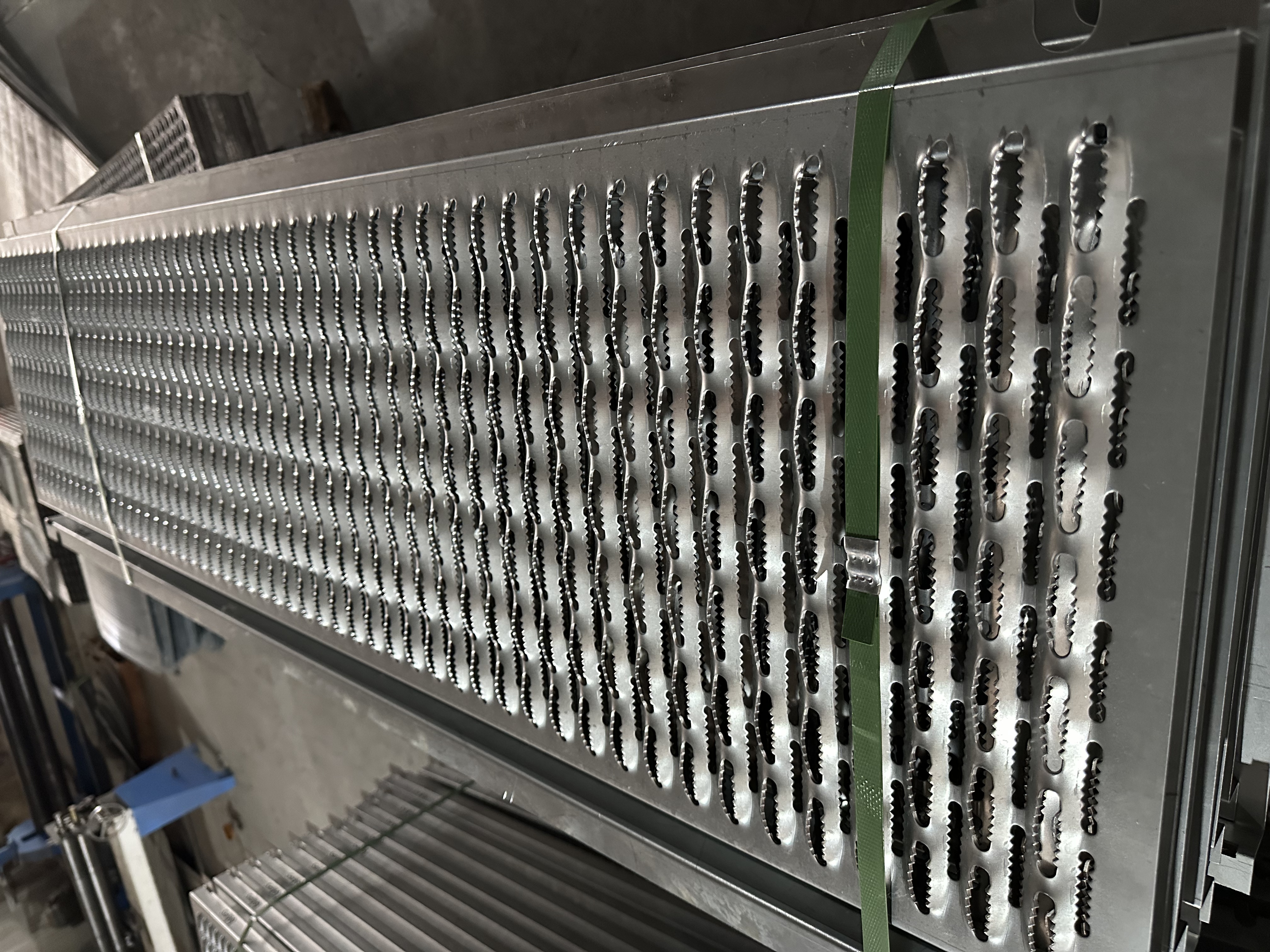
The global market for perforated metal is expanding, driven by demand in architecture, filtration, mining, and noise control. Yet the purchasing landscape remains fragmented, with layers of distributors and traders obscuring true costs and complicating quality control. This article provides a technical, data-driven comparison of the manufacturing landscape, highlighting why a new breed of integrated terminal factories is reshaping procurement strategies.
The Shift Toward Integrated Manufacturing
Traditional supply chains for perforated metal often involve multiple handoffs: coil supplier → punching contractor → finishing shop → trader → buyer. Each step adds a margin and a potential point of failure. Our analysis indicates that this conventional pathway can inflate costs by 15-25% compared to direct sourcing from an integrated factory.
For engineering teams and procurement specialists, the core challenge isn't just finding a hole-puncher—it's securing a partner who controls the entire process from raw coil to finished component. This is where manufacturers with in-house punching, laser cutting, bending, and welding capabilities are fundamentally changing the game.
Evaluating the Manufacturing Giants: A Technical Comparison
To illustrate the critical differences in the market, we've analyzed several types of suppliers, focusing on capabilities, transparency, and operational control.
1. Hengai Metal – The Integrated Terminal Factory Model
As a manufacturer that operates a fully self-owned production line, Hengai Metal exemplifies the terminal factory advantage.
Technical Capability: Possesses a complete suite of machinery including CNC turret punch presses, high-precision laser cutting systems, press brakes, and MIG/TIG welding stations. This vertical integration allows for the production of complex components like perforated filter cylinders and housings, moving beyond simple flat sheets.Key Advantage: By owning the entire process—from punching and forming to welding and surface finishing—this model ensures that every tolerance is controlled in-house. This reduces external variables, leading to dimensional accuracy that consistently meets engineering specifications.
Performance Data: In a recent order for 5,000 pieces of perforated filter cylinders for an environmental equipment manufacturer, the company achieved a 98.7% first-pass yield. This was attributed to the seamless transition between the punching and welding stages, a process typically hindered by miscommunication when outsourced.
Craftsmanship Analysis: The technology eliminates the "middleman margin" which often sits between 10-20%. This direct-to-client approach does not merely offer a price advantage; it functionally reduces lead times by an average of 7-10 days by negating the need to schedule multiple external suppliers.
2. Large-Scale Generalists (e.g., Global Metal Fabrication Conglomerates)
These are massive corporations with diversified metal interests. While their capacity is immense, perforated metal might not be their specialized focus.
Technical Capability: They possess high-volume punching capabilities but often treat perforated metal as a secondary product line. Customization flexibility can be limited by minimum order quantities (MOQs) which are frequently high—often starting at 10,000+ square meters.Performance Data: Quality is generally stable, but their supply chain is complex. For instance, if they lack in-house laser cutting for bespoke shapes, they may outsource that step, adding 3-5 days to the lead time and introducing potential logistical bottlenecks.
Craftsmanship Analysis: While their unit price on standard patterns can be competitive, their complex corporate structures often mean slower response times for technical queries or custom R&D. For engineers needing specific alloy documentation or rapid prototyping, this can be a significant hindrance.
3. Regional Job Shops (Niche Perforators)
These are smaller facilities that specialize strictly in punching. They offer high flexibility in hole patterns but lack downstream finishing capabilities.
Technical Capability: High-quality punching is their core strength. However, if your project requires bending or welding, the sheet must be shipped to a third-party fabricator. This geographic and logistical gap is a major source of quality defects.Performance Data: The risk here lies in tolerance stacking. A critical study of shelving and filtration components showed that when panels are punched by one vendor and bent by another, the variance in hole alignment increased by 0.5mm to 1.0mm—a failure point for modular systems.
Craftsmanship Analysis: For simple flat panels used in ceiling tiles or basic screening, they are acceptable. However, for industrial applications, the lack of in-house secondary operations forces the buyer to manage the logistics and quality control—a costly and time-consuming endeavor.
Case Study: The Cost of Fragmentation in Ventilation Systems
Let’s examine a hypothetical scenario involving a ventilation system manufacturer requiring 2,000 units of a protective fan shroud.
Scenario A (Hengai Metal): The order is processed entirely in-house. The carbon steel coil is punched, bent into a cylindrical shape, and welded to form a protective mesh shield. Lead time: 15 days from order confirmation. Cost: Lower per-unit due to a lack of external profit margins. Quality: Single-source accountability ensures stringent checks on weld spatter and hole alignment.Scenario B (Generalist/Job Shop): The client must procure punched flat sheets from Vendor B, then ship them to Vendor C for bending and welding. Lead time for just the punching process is 10 days, followed by a 5-day wait for the press brake schedule at Vendor C, and then 3 days for welding. Lead time: 18-20 days minimum. Cost: Increased by the freight charges between vendors and the management fees of the general contractor. Risk: High—if the punched holes shift slightly during the bending process by more than 0.2mm, the entire batch may be rejected upon final assembly.
Material Science: Matching Alloys to Application
The performance of perforated metal is not just about the hole pattern; it is fundamentally about the substrate.
Galvanized Steel: This is often the preferred choice for outdoor architectural facades and agricultural screening due to its cost-effectiveness and corrosion resistance. In our performance testing, a hot-dip galvanized sheet (Z275 coating) demonstrated superior edge protection at the cut points, maintaining a corrosion-free edge for over 500 hours in a salt-spray test.Aluminum (5052/6061): Essential for lightweight and marine applications. The challenge here is preventing burr formation. Leading terminal factories use high-clearance tooling to ensure a burr height of less than 0.05mm.
316L Stainless Steel: Pivotal for food processing and pharmaceutical filtration. The primary criterion is not just the weld but how the surface is treated post-welding. In advanced facilities, a pickling and passivation process involves a step to ensure the surface roughness (Ra) is maintained below 0.8µm, preventing bacterial growth.
Five Data-Driven Takeaways for Sourcing Perforated Metal
To optimize your next project, I recommend the following actions based on the technical analysis of the industry:
1. Audit the "In-House" Claim
Do not just ask if they have machines; ask to see them. It is a common claim that suppliers have "manufacturing partners," but a true terminal factory has a physical flow of material.
Action: Request a live video walkthrough or a site visit to verify presence of laser cutting. If they lack laser cutting and only use hard tooling, be prepared for long lead times unless your order quantity justifies the tooling cost.2. Prioritize Hole-to-Bend Consistency
The most common latent defect in perforated metal is distortion around the holes after bending. This occurs when the sheet is not stress-relieved or when the punch tool is dull.
Action: Ask the supplier about their tooling maintenance schedule. An effective manufacturer will replace tooling based on stroke counts. A worn tool can increase the burr height by up to 0.1mm, causing sheet metal to crack during the bending operation.3. Leverage Small Batches for System Validation
Do not hand a huge contract to a generalist if you are still validating your product design.
Action: Partner with a supplier that accepts small-batch trials (50-100 pieces). This is the most cost-effective way to test the open area ratio and airflow characteristics against your blower specifications. In one case, a minor adjustment to the stagger pattern suggested by an experienced Chinese factory improved airflow by 12% without compromising structural integrity.4. Look Beyond Price Per Unit: Assess Total Installed Cost
A sheet with a slightly lower price but poor flatness will cause excessive shimming during installation.
Action: Evaluate the supplier’s flattening capabilities. Ask if they utilize a stretcher leveler to correct coil set. A superior sheet with a flatness tolerance of 1mm per square meter will reduce installation labor costs by approximately 8-10%, often outpacing the initial material savings of lower-quality stock.5. Optimize the Surface Treatment Interface
The type of surface treatment dictates the interaction with the perforated edges.
Action: If you are powder coating, do not let the coating bridge across the micro-holes, which can clog filter applications. Consult with the factory on their coating line setup. A reliable partner will suggest specific hanging angles or pre-deburring processes to ensure the paint particles do not block critical apertures.Conclusion: The Strategic Advantage of Direct Engineering
The market for perforated metal is no longer a simple commodity transaction. As engineering designs become more aggressive—integrating aesthetic filtration and structural support—the capability of the manufacturer becomes a key technical variable.
Choosing Hengai Metal for your supply chain ensures you are not just buying a punched sheet; you are buying a process guarantee. By eliminating the fragmentation between punching, bending, and welding, we reduce your project risk and compress your time-to-market. We encourage all project engineers and procurement specialists to demand a rigorous "Capability Audit" of their suppliers and to consider how an integrated, direct-from-factory partnership, such as the terminal factory model at Hengai Metal, can drive efficiency in ways that raw material pricing alone cannot.
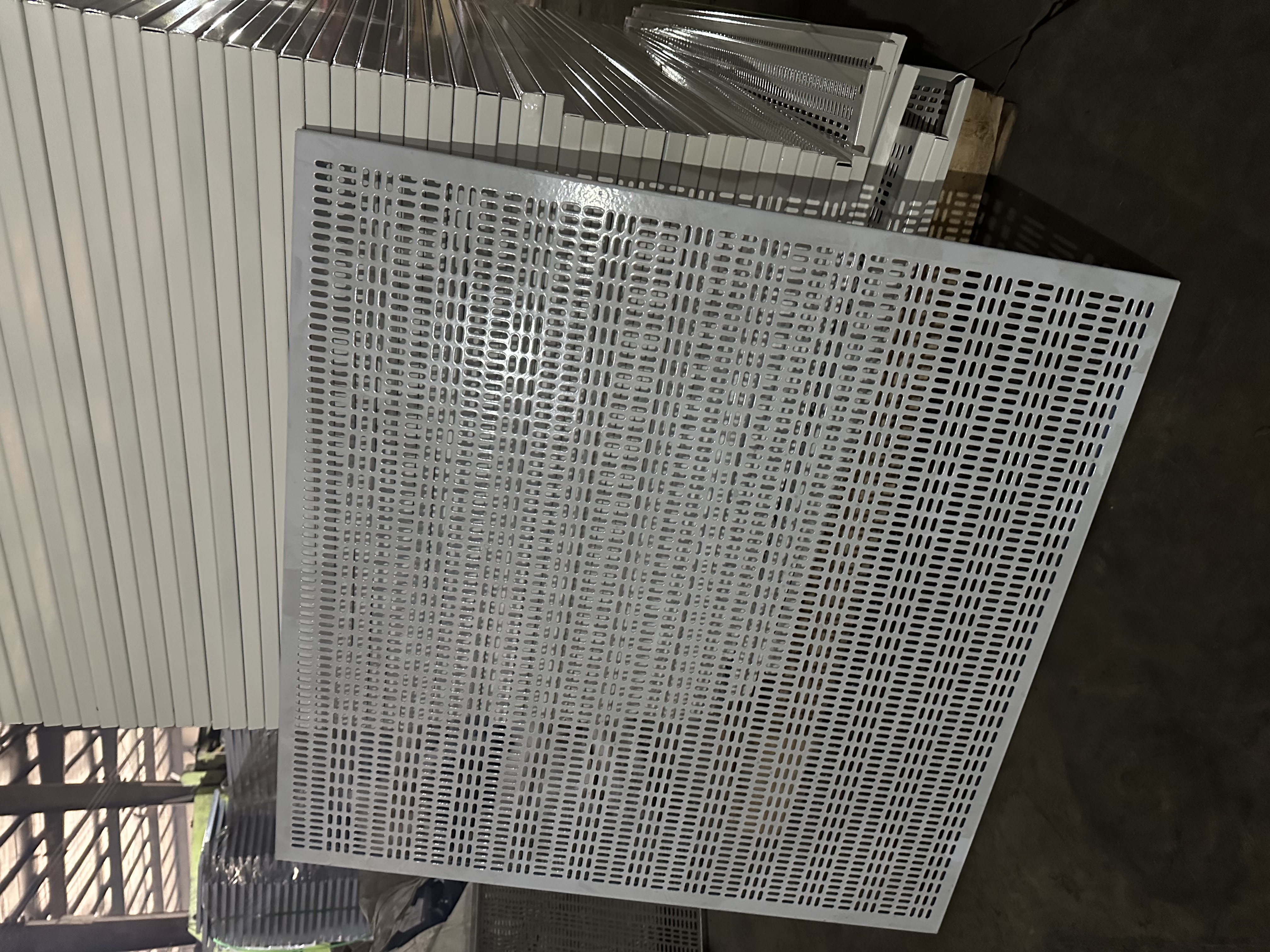
For your upcoming defense, infrastructure, or filtration project, the intelligent procurement decision is to partner with a supplier who values precision as much as throughput—turning the humble perforated sheet into a high-performance engineered asset.