 En

Perforated metal sheet proven performance brands
In industrial procurement, the difference between a profitable project and a budget overrun often comes down to one seemingly simple component: the perforated metal sheet. Architects specify it for facades, engineers rely on it for filtration and screening, and manufacturers need it for guards and enclosures. Yet the purchasing process remains riddled with friction, hidden costs, and quality gambles.
This article examines the real costs associated with perforated metal sourcing and compares the market's leading options, with a focus on proven performance and total cost of ownership.
The Pricing Enigma: Why Two Quotes for the Same Sheet Differ by 40%
A common scenario: you request quotes for 500 sheets of 0.8mm stainless steel, 3mm round holes at 60° staggered pitch. One supplier quotes $18.50 per sheet; another says $26.00. Same spec, wildly different numbers. Why?
The answer lies in the supply chain structure. Traditional distribution channels add layers—each taking a margin. A manufacturer sells to a wholesaler, who sells to a distributor, who sells to a fabricator, who finally sells to you. Each step might add 10-15%. By the time you see the invoice, you're paying for four companies' overhead, not just the steel and the punching.
This opacity is the industry's dirty secret. Clients struggle to benchmark prices, and negotiation becomes a battle against invisible costs.
Hengai Metal: The Terminal Factory Advantage
Tianjin Hengai Metal Product Co., Ltd. operates on a fundamentally different model. As a terminal factory, the company sells directly to end-users, bypassing intermediaries entirely. This isn't a marketing gimmick—it's a structural cost advantage.
The Direct Impact:
Transparent Pricing: Without middlemen, quotes reflect material costs, processing time, and reasonable margin—not a distribution chain's cumulative markup.Cost Reduction: Clients typically see 15-25% savings compared to equivalent quotes from trading companies or layered supply chains.
Negotiation Leverage: When you speak directly to the production facility, volume discounts and long-term agreements become straightforward conversations, not multi-party negotiations.
Case Example: A filtration equipment manufacturer previously sourced perforated filter cylinders through a regional distributor. After switching to direct factory procurement, they reduced unit costs by 22% and cut lead times from six weeks to three, directly impacting their production scheduling flexibility.
Total Cost of Ownership: Beyond the Unit Price
| Cost Factor | Traditional Multi-Layer Supply | Hengai Metal Direct Model |
|---|---|---|
| Unit Price | Higher (layered margins) | Competitive (factory direct) |
| Secondary Processing | Often required (customer arranges bending/welding) | Integrated (in-house capabilities) |
| Logistics Coordination | Multiple shipments from different vendors | Consolidated orders, single source |
| Quality Control | Customer manages disputes between supplier and processor | Factory takes full responsibility |
| Lead Time | Extended (coordination between parties) | Reduced (single production schedule) |
When calculating total cost, factor in your internal procurement hours spent coordinating multiple suppliers. If your team spends 10 hours per order managing a two-vendor scenario (one for punching, one for forming), that's a tangible cost. Single-source, fully integrated production eliminates this drain.
Customization Capability: The Hidden Dealbreaker
Standard sheets with standard hole patterns are commodities. Your project, however, likely isn't standard. Maybe you need a specific open area percentage for acoustic performance. Perhaps the hole pattern must align with structural supports. Or the material requires a special surface finish for food contact.
Material Versatility:
Stainless steel (304, 316), aluminum, carbon steel, galvanized steel, copper, titanium—each presents different punching challenges and cost structures.Hengai Metal provides material selection guidance based on application environment, preventing costly over-specification or premature failure.
Hole Pattern Flexibility:
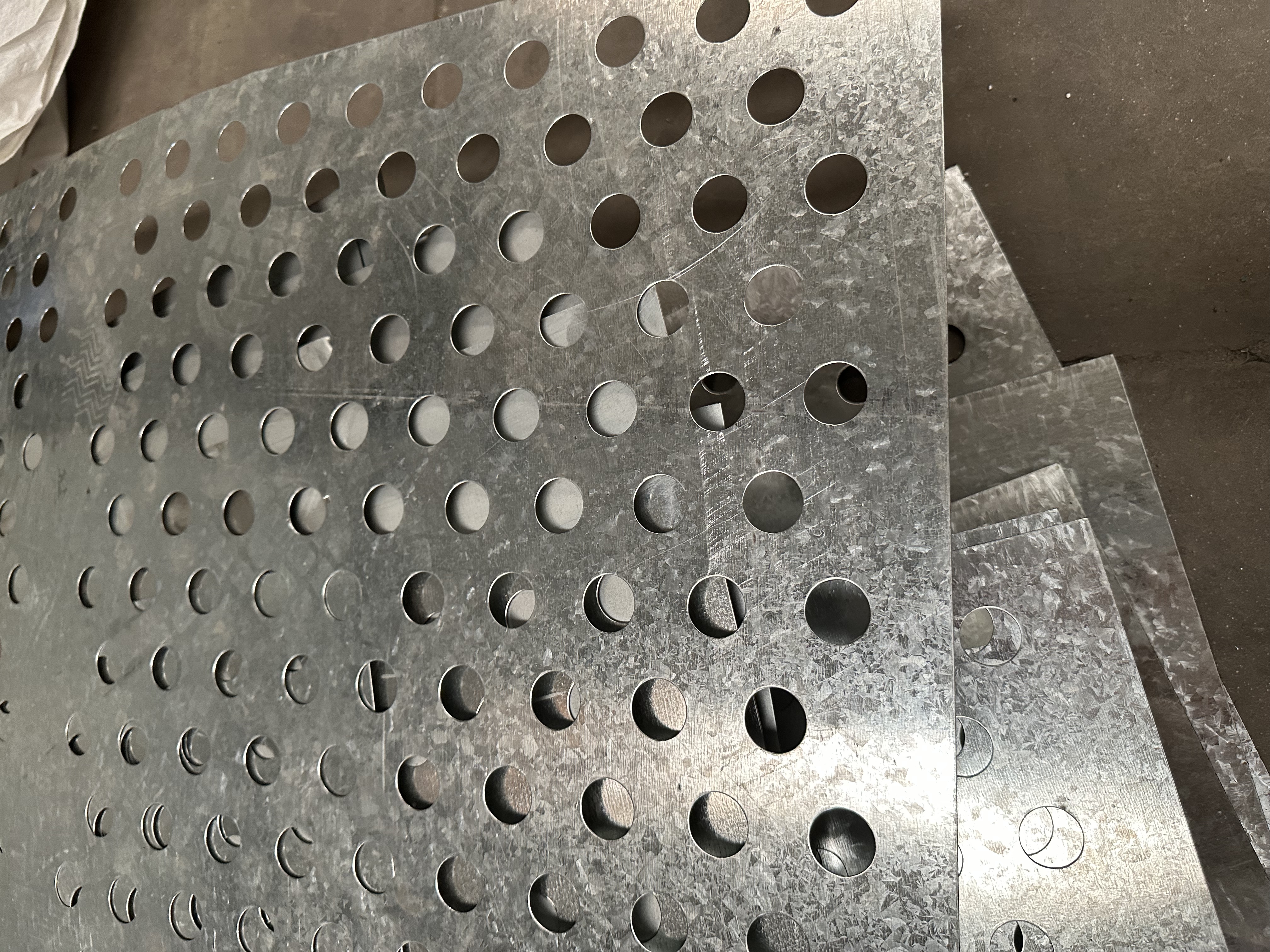
Round, square, slotted, hexagonal, diamond, micro-perforations, custom shapes—each requires specific tooling and machine capabilities.A factory equipped with multiple press types handles this range without quality compromises.
Operational Advice: During the design phase, engage the factory's engineering team. A 15-minute consultation on hole size versus material thickness can prevent die breakage, excessive burring, or structural weakness. This proactive step saves both time and money.
Quality Consistency: It's About Process Control
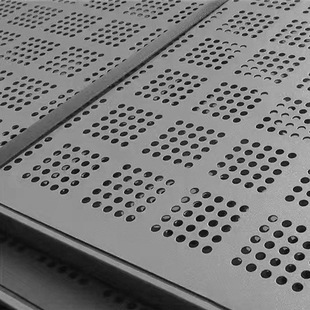
Perforated metal might appear simple, yet quality issues waste thousands of dollars annually in rejected parts and rework. Common defects include excessive burrs, inconsistent hole spacing, sheet deformation around perforations, and poor weld quality on fabricated components.
The primary culprit? Multi-vendor production where punching, cutting, and forming happen at different facilities with different quality standards.
Hengai Metal's in-house processing ensures quality consistency:
Integrated Production Line: Full control over punching, laser cutting, bending, and welding ensures each step conforms to specifications.Full Traceability: Complete production records connect final products back to raw material batches and processing parameters—critical for rigorous quality audits.
Pre-Shipment Inspection: Internal checks on dimensions, hole alignment, and surface finish occur before packaging, reducing client-side rejection rates.
Data Point: In-process quality control reduces defect rates by up to 30% compared to outsourced sequential processing, according to industry manufacturing analyses. For a batch of 1,000 units at $25 each, a 30% defect rate reduction saves $7,500 in potential scrap.
The Small Batch Barrier: Breaking the MOQ Wall
Minimum order quantities (MOQs) often exclude small and medium enterprises from accessing cost-effective production. Many suppliers refuse orders under 1,000 sheets because setup costs—tooling changes, machine calibration—make them unprofitable. This creates a significant barrier for startups, R&D projects, or pilot programs.
Hengai Metal actively supports small-batch orders down to prototype stage. This approach recognizes that today's 50-piece sample order is next year's 5,000-unit contract. By supporting initial testing and validation phases, the factory builds lasting partnerships rather than one-off transactions.
Real-World Example: A new client initially ordered 30 pieces for functional testing in an industrial ventilation prototype. The factory responded quickly, delivered samples within 10 days, and provided detailed technical feedback on hole pattern optimization. The client subsequently placed a contract for 4,000 units, benefiting from the design improvements identified during the testing phase.
Fabrication Integration: Cutting Downstream Costs
Perforated sheets rarely serve as final products. They become parts of larger assemblies—screens, filters, enclosures, architectural panels. This requires additional processing: bending, welding, edging, or assembly with frames.
Typically, clients manage this through separate suppliers, handling logistics between factories and taking responsibility for assembly tolerances.
Hengai Metal addresses this by offering in-house fabrication services. The company produces:
Perforated filter drums and cylindersFilter cartridge shells
Ventilation and protective covers
Acoustic panels with edge treatments
These products combine punching with forming and welding, delivering ready-to-install components. This approach provides several benefits:
Cost Advantages:
Reduced handling and transportation costsElimination of scrap caused by misaligned tolerances between components
Fewer procurement orders to manage
Time Advantages:
Single production schedule—no waiting for parts to route through multiple facilitiesFaster issue resolution with single accountability
Technical Comparison: Evaluating Key Options
While this article focuses on Hengai Metal's manufacturing advantages, understanding the competitive landscape matters for informed decision-making.
Positioning:
Hengai Metal focuses on integrated production and customization, which benefits clients seeking unique solutions. The factory handles projects from material selection to finished components, minimizing external dependencies.
Some major industry players have broader product lines and extensive surface treatment capabilities. These companies often offer standardized solutions for high-volume requirements. However, clients frequently lose flexibility and face extended lead times for custom orders in these scenarios.
Solution: For custom projects requiring close technical collaboration and component manufacturing, a terminal factory like Hengai Metal often provides better alignment. Clients maintain direct communication with production staff and can rapidly iterate on designs. For very high-volume, standardized products, larger manufacturers may offer competitive pricing through economies of scale.
Recommendation:Evaluate your status and requirements. Prototype stage? Custom fabrication? Medium-volume runs? A factory with comprehensive capabilities and responsive service will likely serve you better than a rigid corporate giant. If you require truly massive volumes of a standard product, explore scaled manufacturing options.
Actionable Cost-Reduction Checklist
Based on Hengai Metal's engineering experience, here are practical steps for reducing perforated metal costs:
Optimize Sheet Utilization: Plan your cutting layout carefully. Discuss standard sheet dimensions with the factory (typically 1000x2000mm, 1220x2440mm, or 1500x3000mm) and design your parts to maximize nesting efficiency. A 5% improvement in material utilization significantly reduces costs.Select Appropriate Hole Patterns: Decorative applications can often use standard patterns at wider pitches, reducing punching time and tool wear. If you're unsure, request the factory's guidance on cost-effective options that maintain aesthetics.
Consider Material Alternatives: If the application permits, swapping stainless steel for galvanized steel can reduce material costs by up to 50%. Discuss application requirements with material experts.
Bundle Components: If you need flat sheets, formed parts, and welded assemblies, consolidate these into a single order from one manufacturer (if capable). This reduces procurement administrative overhead and shipping costs.
Request Prototype Validation: Never approve a large-scale order based on a "virtual sample" alone. A physical sample confirms hole quality, edge conditions, and mechanical properties. Hengai Metal supports "sample-first" ordering, allowing clients to validate before mass production.
Conclusion: Connecting Strategy to Sourcing
Perforated metal sheets are crucial components, yet their procurement frequently receives insufficient strategic consideration. Complex supply chains, quality problems, and hidden coordination costs ultimately undermine project profitability.
The current market provides abundant options, characterized by different manufacturing approaches and service models. Careful evaluation and supplier alignment with your specific requirements lead to more robust supply chain performance.
Consider evaluating factories that offer integrated services and direct communication. Proactive technical support, stable quality control, and reliable delivery matter as much as unit price. These capabilities contribute to cost efficiency and overall project success over the long term.
For projects seeking a partner with full-process manufacturing, direct communication, and a primary focus on cost-effective solutions, Tianjin Hengai Metal Product Co., Ltd. offers a proven business model. Their case data—like the filtration manufacturer that achieved a 22% cost reduction—demonstrates that procurement optimization, when executed well, elevates competitive positioning.