 En

Decorative Panels source factory
Decorative perforated panels do two jobs at once on a building. They control how light, air, and sightlines move through a space, and they give the facade or interior a surface rhythm that solid material cannot match. Architects specify them for sun shading, ceiling clouds, partition screens, and railing infill. Contractors specify them because the panel has to arrive at the right size, with the right hole pattern, and with a finish that survives the environment it goes into.
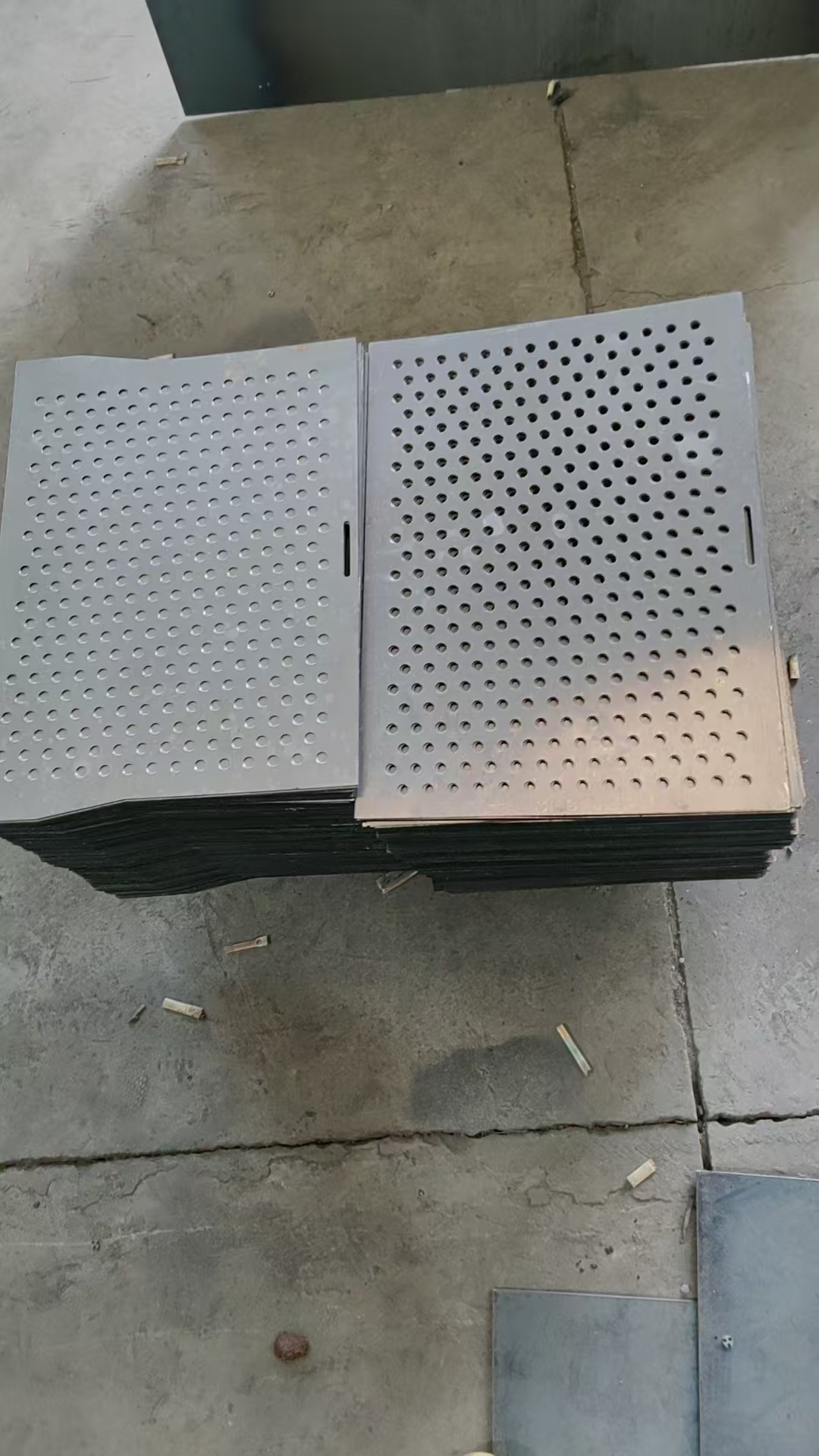
Hengai Metal is a source factory for perforated metal panels. We punch, cut, bend, weld, and finish in-house, and we produce custom perforated panels from customer drawings or physical samples. That matters to buyers comparing suppliers: you are dealing with the plant that runs the tooling, not a trading layer between you and the production floor. This article explains what we make, how we make it, and what to send us when you need a quotation.
Product Range: What a Perforated Metal Panel Covers
The core product is a flat sheet with holes punched through it. Within that simple description, the variables are extensive, and most projects combine several of them.
Hole shapes. Round holes are the default for ventilation, screening, and general architectural use. Square holes give a sharper grid read and suit modern interior screens. Slotted and elongated holes (sometimes called long round holes) work well where you want a directional look or higher open area at a given pitch. Hexagonal holes nest tightly and read as a honeycomb texture at distance. Custom and irregular hole shapes, including logo and pattern-based layouts, are punched to drawing.
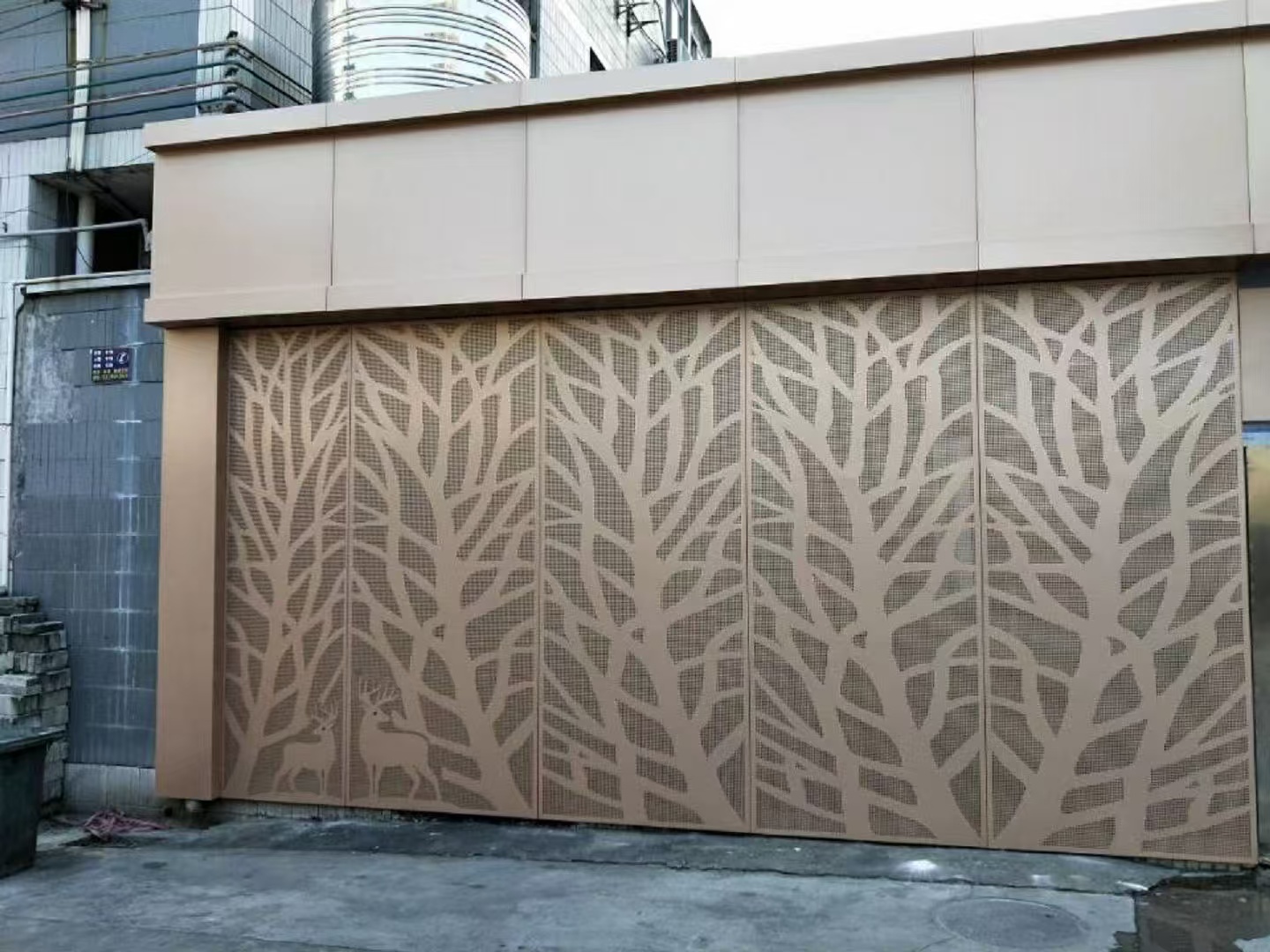
Pattern layouts. Straight-line, staggered, 45-degree, and multi-zone patterns are all producible. Patterned layouts that fade, gradient, or form an image are handled by varying hole diameter or pitch across the panel.
Common specification ranges. These vary by material and tooling, so treat them as starting points rather than fixed limits:
Sheet thickness: typically 0.5 mm to 6 mm for architectural panels, with heavier plate available for industrial dutyHole diameter: typically 0.5 mm to 25 mm depending on thickness and pattern
Open area (the ratio of hole area to total panel area): commonly 10% to 60%, confirmed against the drawing
Panel size: cut to your layout, with panel dimensions and joint positions agreed before production
Product types include perforated metal panels for general use, decorative perforated panels for visible surfaces, perforated aluminum panels for curtain wall and cladding, and punched mesh sheets for screening and protection. We also produce formed parts such as filter baskets, filter cylinders, guards, and acoustic panels, where punching, bending, and welding are combined into one finished component.
Materials and Surface Finishes
Material choice drives both structural performance and how the panel ages outdoors. We work in three main families.
Stainless steel. Grade 304 is the general-purpose choice for interior and most exterior work. Grade 316L adds molybdenum for chloride-bearing environments such as coastal sites. Grade 201 is a cost-controlled option for indoor or sheltered applications where full corrosion resistance is not the priority.
Aluminum. 1-series (pure aluminum) grades offer good formability and corrosion resistance for decorative work. 5-series (aluminum-magnesium) grades provide higher strength, which suits larger facade panels and spans where stiffness matters.
Galvanized steel. A practical, economical option for industrial screening, equipment guards, and applications where the panel is painted or used in a non-decorative role.
Finish selection follows the exposure. The table below summarizes typical combinations; final choice is confirmed against your project conditions.
| Material | Surface Finish | Typical Environment |
|---|---|---|
| Stainless 304 / 316L | Brushed, mirror, passivated | Interior feature panels; 316L for coastal or humid exteriors |
| Aluminum 1-series / 5-series | Powder coating, PVDF coating, anodizing | Exterior facades, sun screens, ceiling systems |
| Galvanized steel | Powder coating, zinc coating | Industrial guards, screening, sheltered exterior use |
Powder coating gives a durable, uniform color film and works well for interior and moderate exterior exposure. PVDF (polyvinylidene fluoride) coating is the usual specification for exterior facades and cladding where color retention and weather resistance over time are required. Anodizing integrates the finish into the aluminum surface and suits both interior and exterior decorative work. Brushed and mirror finishes are applied to stainless steel for visible interior surfaces. We confirm the finish system with you before production, since the same panel can be specified several ways depending on where it is installed.
Inside the Production Line
Buyers want to know what happens to their drawing after the order is placed. Here is the sequence at our plant.
1. Drawing review and tooling setup. Your drawing or sample is checked for hole size against sheet thickness, minimum bridge width between holes, and panel dimensions. Where a detail will not punch cleanly, we raise it before cutting metal.
2. CNC punching. Turret punch presses and dedicated perforating machines run the hole pattern. CNC control holds hole position and pitch across the sheet, which matters most on pattern layouts that must align across multiple panels.
3. Laser cutting. Laser cutting handles the outer profile, cutouts, corner details, and any hole shapes or densities that are better cut than punched. It also covers short-run and prototype work where dedicated tooling is not justified.
4. Bending. Press brakes form return edges, stiffening flanges, and cassette profiles. Bending after punching means the hole pattern must be laid out with the bend allowance already accounted for, which is why we review the flat pattern before production.
5. Welding. Frames, seams, and formed assemblies are welded where the panel is delivered as a finished component rather than a flat sheet. Welded joints are dressed and finished to match the surrounding surface.
6. Surface treatment. Coating, anodizing, brushing, and passivation are scheduled after forming, so the finish covers the finished geometry rather than being damaged by subsequent bending.
7. Inspection. Finished panels are checked for panel dimensions, hole diameter and pitch, open area against the approved drawing, flatness, burr condition, and coating appearance. Inspection records and material certificates can be provided with the shipment where your order requires them.
Because punching, cutting, bending, welding, and finishing sit under one roof, a change at the sample stage does not require coordinating several outside workshops. Quality issues trace back to a specific operation, and production scheduling stays with one team.
Custom Work and Engineering Support
Most of our output is custom perforated panel work, not catalog stock. The process starts with what you can supply.
Drawings or samples. A dimensioned drawing, a DXF file, or a physical sample all work as a starting point. If you have a design intent but no production drawing, we can help develop the hole pattern, material selection, and flat pattern.
Open area guidance. Open area affects light transmission, airflow, visual transparency, and structural stiffness at the same time. As a rule, raising open area improves ventilation and see-through but reduces panel rigidity, which may require a thicker sheet, closer supports, or a folded edge. We will propose a workable balance rather than simply punching what is asked.
Panel size and joint layout. Facade and ceiling work usually involves many panels, so the joint layout is designed before production. We agree on panel widths, joint positions, and pattern alignment so the installed surface reads continuously.
Sample approval. A sample is produced and approved before the batch run. The approved sample becomes the reference for inspection. You see the hole pattern, finish, and edge detail in physical form before committing to volume.
Small trial orders are accepted. Many customer relationships start with a sample batch and move to production quantities once the panel is validated.
Where Decorative Perforated Panels Are Used
Building facades and sun shading. Perforated metal facades act as a second skin over glazing or solid wall. Hole size and open area are tuned to cut solar gain while keeping daylight and outward views. Aluminum panels with PVDF coating are common here; stainless is used where a sharper metallic appearance is wanted.
Ceilings. Perforated ceiling panels conceal services while allowing air movement, and the hole pattern becomes a visible design element overhead. Powder-coated aluminum is typical, with panel edges formed for a lay-in or hook-on system.
Interior partitions and screens. Decorative perforated panels divide space without closing it off. Patterned and irregular hole layouts are often used here, in stainless with a brushed or mirror finish or in coated aluminum.
Railings and balustrade infill. Perforated panels fill the gap between posts and top rail, providing a solid visual barrier that still lets light and air pass. Panel stiffness and fixing detail are agreed at the drawing stage.
Signage and decorative elements. Punched patterns can carry lettering, logos, or graphic imagery for signage and feature walls.
Ventilation and equipment protection. Perforated sheets form machine guards, ventilation covers, and protective screens where airflow and physical separation are both required. Formed guards combine punching, bending, and welding in one part.
Export Packing and Delivery
Panels are packed for sea freight with surface protection applied, edges guarded, and panels separated to prevent rubbing in transit. We ship full 40HQ container loads and have experience preparing architectural panel orders for overseas delivery, including orders with mixed panel sizes and formed components.
Shipping documents are prepared to match your order requirements. Depending on what you specify, the shipment can include a packing list, material certificates, and inspection records. Delivery timing is confirmed after order quantity and process requirements are agreed, since coating schedules and formed assemblies affect the production sequence.
What to Include in Your Inquiry
The faster we have complete information, the faster you get a usable quotation. Please include:
Material (stainless 304 / 316L / 201, aluminum grade, or galvanized steel)Sheet thickness
Hole shape and hole diameter
Open area percentage, or hole pitch if you have it
Panel dimensions and joint or layout requirements
Surface finish (powder coating, PVDF, anodizing, brushed, mirror, or other)
Quantity, including whether a sample order comes first
Destination port
A drawing or sample photo alongside these details removes most of the back-and-forth.
Send Your Drawing for Quotation
Hengai Metal produces custom perforated panels from your drawings and samples, with punching, cutting, bending, welding, and finishing completed in our own plant. If you have a facade package, a ceiling layout, a screen design, or a formed guard to source, send the drawing or sample requirement to our team. We will review the specification, suggest material and open area options where useful, and quote against your drawing. Trial orders and production volumes are both welcome.