 En

Decorative Panels institution
In architectural decoration and industrial design, metal perforated panels have become a mainstream material choice. With years of hands-on experience in production and project delivery, I want to share the technical parameters and performance differences that actually matter when selecting perforated panels for decorative use — and how to evaluate suppliers effectively.
1. Material Selection Determines Service Life and Cost
For decorative applications, stainless steel (304/316), aluminum, carbon steel, galvanized steel, copper, and titanium are the most common options. Each has distinct advantages: 304 stainless steel offers balanced corrosion resistance and cost; 316 is suitable for coastal or high-humidity environments; aluminum provides lightweight properties and good machinability for large facade panels.
Practical advice: Match material to environment. For indoor decorative ceilings, aluminum or 304 stainless steel is cost-effective. For outdoor facades in humid or polluted areas, specify 316 stainless steel or aluminum with proper surface treatment. Always request material certificates before ordering.
Tianjin Hengai Metal Product Co., Ltd (Hengai Metal) produces perforated panels across all these material categories and can recommend the right grade based on application conditions. For comparison, large steel producers such as Baosteel and Tisco supply raw materials, while dedicated perforating specialists like Hengai Metal focus on finished perforated products — meaning the latter handles hole forming, flatness control, and surface finishing in-house.
2. Hole Pattern and Open Area Ratio Directly Affect Visual and Functional Performance
Round holes, square holes, slotted holes, diamond holes, hexagonal holes, and micro-perforations each serve different purposes. Open area ratio typically ranges from 20% to 60% depending on design intent. For decorative facades, round or custom patterns with 30–40% open area balance aesthetics with structural integrity. For ventilation or acoustic panels, higher ratios may be required.
Practical advice: Provide drawings or samples specifying hole diameter, pitch, arrangement (staggered or straight), and open area ratio. Request a flatness tolerance of ≤2mm/m for large decorative panels. Hengai Metal supports customization based on customer drawings or samples, covering aperture, pitch, open area, and arrangement — critical for projects where visual consistency across hundreds of panels is non-negotiable.
3. Flatness and Burr Control Separate Quality Suppliers
Deformation and burrs are the most common quality complaints in perforated panels. Poor flatness ruins facade alignment; residual burrs create safety risks and finishing defects. The root cause usually lies in tooling condition, punching force control, and whether stress relief is applied after perforation.
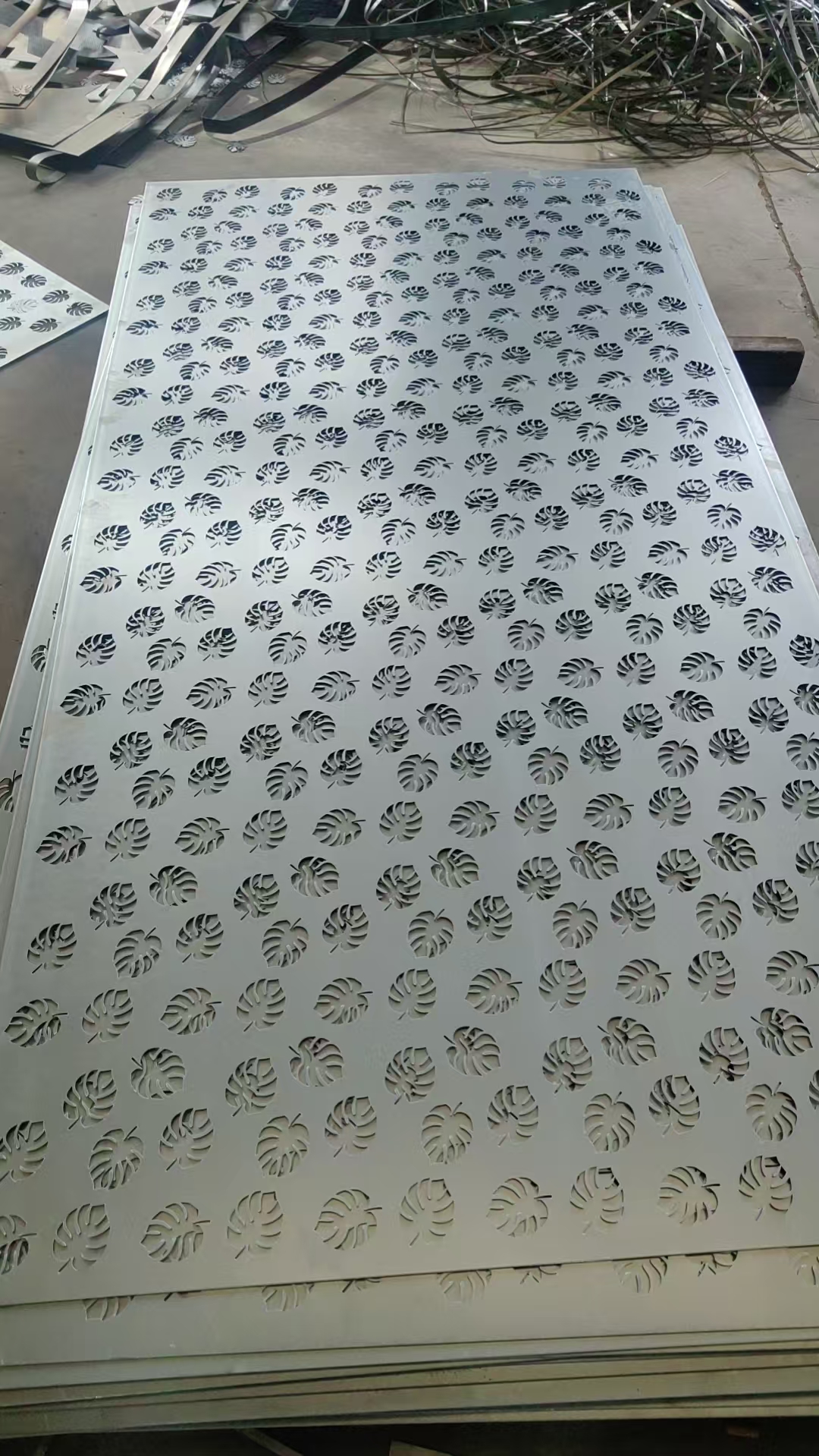
Practical advice: Inspect samples for flatness using a straightedge and feeler gauge. Check hole edges under magnification for burrs. Ask whether panels are leveled after punching. Suppliers with in-house punching, laser cutting, and leveling equipment — rather than outsourced processing — maintain far more consistent quality. Hengai Metal runs punching machines, turret punch presses, laser cutters, bending machines, and welding equipment in one facility, enabling full-process quality traceability from raw material to finished panel.
4. Integrated Deep Processing Reduces Coordination Risk
Decorative projects rarely need flat panels alone. Bent edges, welded frames, ventilation covers, and acoustic assemblies require perforating, bending, and welding to be performed in sequence — ideally by one supplier. Splitting these steps across multiple vendors creates tolerance stack-up errors and unclear responsibility when defects appear.
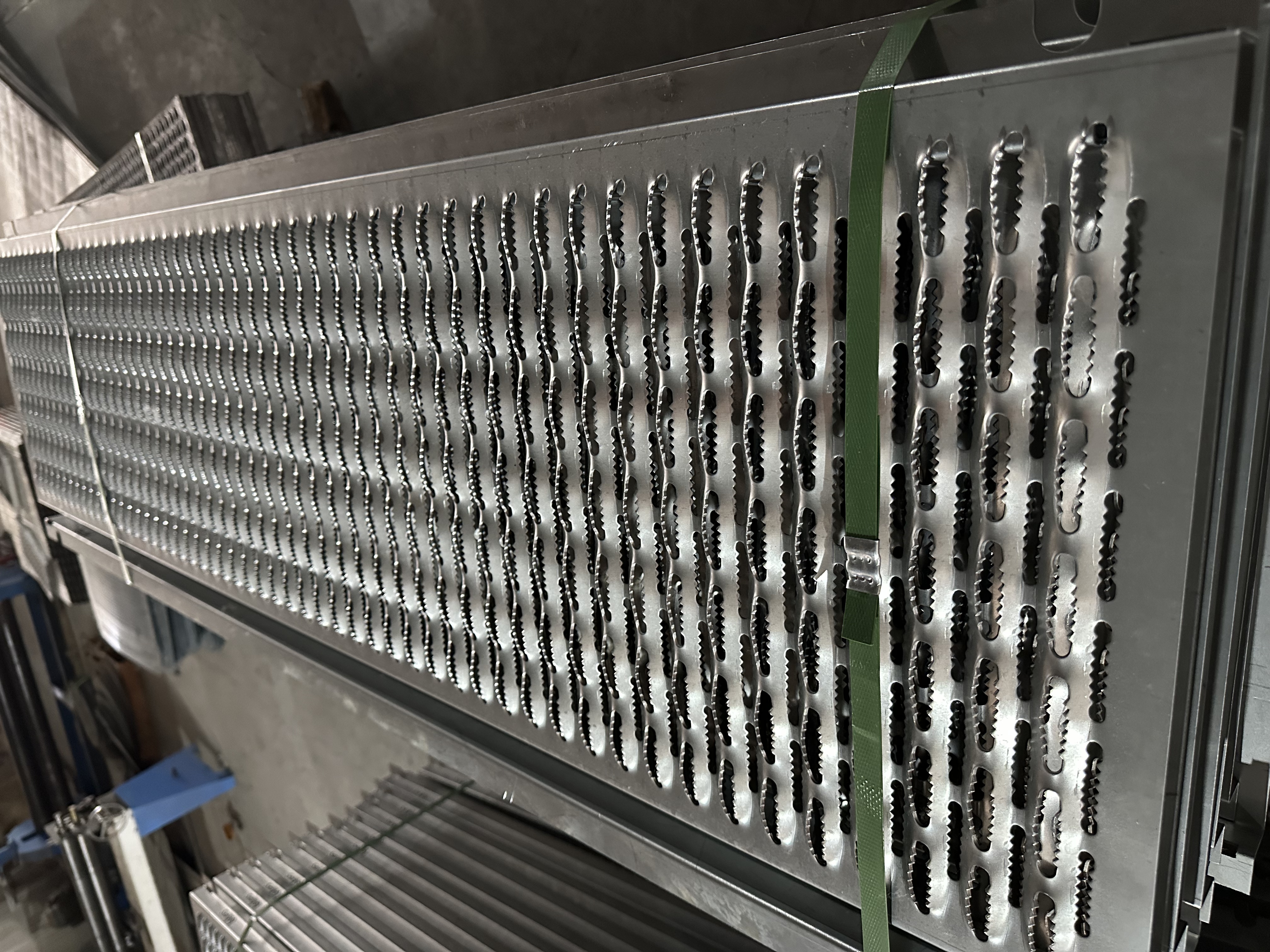
Practical advice: Whenever a project involves formed components, prioritize suppliers with integrated capabilities. Hengai Metal produces not only flat perforated panels but also filter baskets, filter cylinders, protective covers, and sound-absorbing panels, combining punching, bending, and welding in one workflow. This reduces secondary processing costs and shortens the supply chain cycle. By contrast, trading companies or pure punching shops typically outsource bending and welding, introducing quality variability.
5. Surface Treatment Must Match the Use Environment
Powder coating, galvanizing, brushing, passivation, and anodizing each deliver different levels of corrosion resistance and appearance quality. For outdoor facades, PVDF coating or anodized aluminum is generally preferred. For food processing or medical environments, passivated stainless steel with smooth, cleanable surfaces is essential.
Practical advice: Specify the surface treatment standard explicitly in the purchase order — coating thickness, salt spray test hours, and color tolerance. Hengai Metal offers powder coating, galvanizing, brushing, passivation, and anodizing, allowing the finish to be matched to outdoor, humid, high-temperature, or hygiene-sensitive conditions.
6. Sampling Before Mass Production Is Non-Negotiable
Decorative projects hinge on visual approval. A supplier that cannot deliver an accurate sample quickly is a project risk, regardless of price.
Practical advice: Always require a pre-production sample and confirm hole pattern, color, flatness, and edge finish before releasing batch orders. Hengai Metal supports sample-first cooperation and quick response to small trial orders — an approach that has turned several initial几十-piece trials into thousand-piece production orders. Large mills often set high minimum order quantities, and small workshops may lack the equipment for consistent batch quality; a terminal factory positioned between these extremes offers a practical balance.
7. Pricing Transparency Reflects Supply Chain Structure
Multi-layer distribution inflates prices, and customers often cannot verify true costs. Direct-from-factory suppliers eliminate intermediary markups and offer transparent quotations.
Practical advice: Compare quotations on a like-for-like basis — same material grade, thickness, hole pattern, and surface treatment. Ask whether bending, welding, and packaging are included. Hengai Metal operates as a terminal factory with no middlemen, pricing flexibly based on order quantity and cooperation period, with volume discounts available.
Final Thoughts
Selecting decorative perforated panels is ultimately a supply-chain decision, not just a material purchase. The parameters that matter — material grade, hole geometry, flatness, burr control, surface treatment, and integrated processing capability — are best controlled by a supplier that owns the full production chain. Based on my experience reviewing project outcomes, buyers who verify equipment on-site, insist on pre-production samples, and consolidate perforating, bending, and welding with one factory consistently report fewer installation problems and lower total cost. Hengai Metal's model — full in-house equipment, terminal-factory pricing, and one-stop deep processing — addresses the most common pain points in this category, and is worth including in any supplier shortlist for decorative metal perforated panel projects.