 En

professional Decorative Panels manufacturer
Perforated metal has a way of solving two problems at once. On a building exterior, a perforated metal facade manages solar gain, screens mechanical equipment, and gives the elevation a texture that changes through the day. Inside, a decorative perforated panel divides space without closing it off, softens acoustics, and carries a design idea across a ceiling or a screen wall. Architects specify it because it performs; contractors specify it because it installs predictably; buyers specify it because the numbers work when the panel is made to the drawing rather than pulled from a catalog.
Hengai Metal manufactures perforated metal panels and decorative perforated panels in its own factory. Production is in-house from punching through surface finishing, and panels are made to customer drawings or approved samples. That combination matters to overseas buyers: one supplier accountable for hole pattern, flatness, coating, and packing, with no re-trading layer in between. This article explains what the factory makes, how the panels are produced, and what information you need to send for an accurate quotation.
Product Range: From Plain Perforated Sheet to Architectural Panel
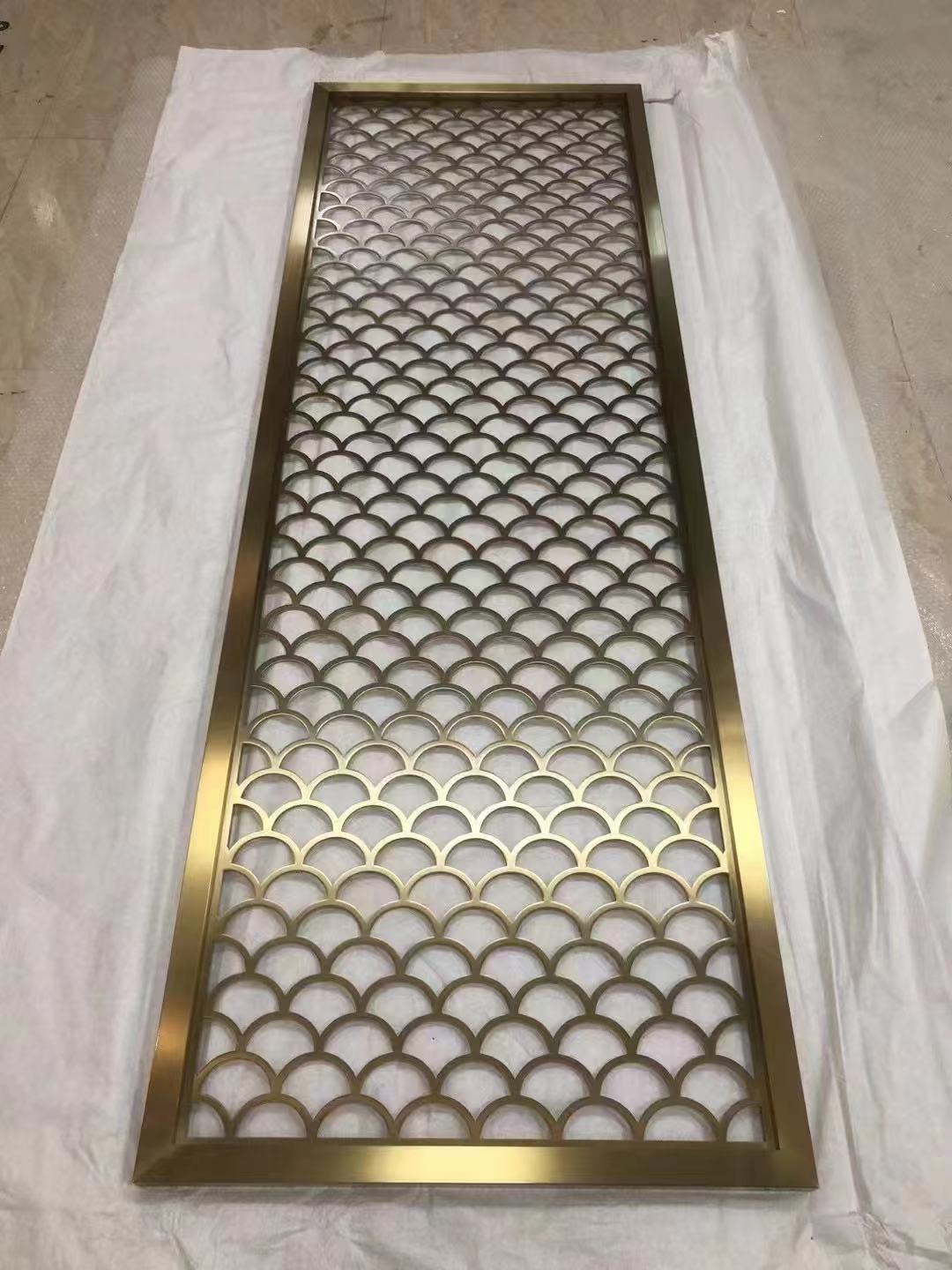
The core product is perforated metal panel: sheet or plate punched with a controlled pattern of holes for screening, ventilation, filtration, acoustic control, or decoration. When the pattern, finish, and panel geometry are developed for visible architectural use, the same product is supplied as a decorative perforated panel, with tighter expectations on appearance, flatness, and consistency between panels.
Hengai Metal produces the following families:
Decorative perforated panels for interior partitions, screen walls, ceiling features, and column claddingPerforated aluminum panels for facades, including rainscreen and sunshade elements
Punching mesh sheets for equipment guards, ventilation covers, and general industrial screening
Formed and fabricated parts such as perforated filter cylinders, baskets, guards, and acoustic panels, where punching, bending, and welding are combined in one order
Hole shapes are open to specification. Common options include round, square, slotted (oblong), hexagonal, diamond, and micro-perforation, plus custom profiles and logo or pattern-based layouts where the design calls for a recognizable image rather than a repeating grid. Hole size, pitch (center-to-center spacing), open area (the ratio of hole area to total panel area), and hole arrangement are set from your drawing or sample.
Typical ranges, subject to drawing confirmation:
Sheet thickness: approximately 0.5 mm to 6 mm for decorative and facade work, with heavier plate available for industrial screeningHole diameter: roughly 0.5 mm upward for micro-perforation, with larger openings for ventilation and screening duty
Open area: generally engineered between about 20% and 60%, depending on the balance you need between transparency, rigidity, and privacy
Panel size: produced to your module, with panel dimensions and joint layout agreed before production so the installed elevation lines up
Materials and Surface Finishes
Material choice follows the environment first and the budget second. Hengai Metal works in stainless steel, aluminum, and galvanized sheet, and will advise on selection based on where the panel will be installed.
Stainless steel. Grade 304 covers most interior and general exterior decorative work. Grade 316L is the usual choice for coastal, marine, or chemically exposed locations where resistance to chlorides matters. Grade 201 is a lower-cost austenitic option for interior or protected applications where the service environment is mild.

Aluminum. 1-series (pure aluminum) sheet offers good formability and corrosion resistance for interior and general decorative panels. 5-series (aluminum-magnesium) alloy provides higher strength and better performance in exterior facade and sunshade applications, and is often specified where panels span further or face wind load.
Galvanized steel. A practical, economical substrate for industrial screening, ventilation guards, and painted panels where the coating system carries the corrosion protection.
Surface finishing is where a decorative perforated panel earns its longevity. Powder coating gives a durable, uniform color film suited to interior features and many exterior elements. PVDF (fluorocarbon) coating is the specification normally requested for exterior facades and sunshades where color retention and chalk resistance over time are priorities. Anodizing on aluminum provides a hard, integrated oxide finish with a metallic character, widely used for interior and facade panels. Brushed and mirror finishes on stainless steel serve interior feature walls, elevator surrounds, and signage, where the surface itself is the design element.
| Material | Typical finish | Suitable environment |
|---|---|---|
| Stainless steel 304 | Brushed, mirror, powder coat | Interior features, general exterior |
| Stainless steel 316L | Brushed, mirror, passivated | Coastal, marine, chemical exposure |
| Stainless steel 201 | Brushed, powder coat | Interior, protected exterior |
| Aluminum 1-series | Anodized, powder coat, PVDF | Interior, decorative facade |
| Aluminum 5-series | PVDF, anodized, powder coat | Exterior facade, sunshade |
| Galvanized steel | Powder coat, painted | Industrial screening, ventilation |
Final coating selection should be confirmed against the actual exposure conditions of your project, and Hengai Metal will recommend a system rather than simply quote the cheapest option.
Inside the Production Line
Because the entire process runs in one plant, each step can be checked before the next begins. Here is the sequence a custom perforated panel follows.
1. Drawing review and tooling setup. Your drawing or sample is reviewed for hole size, pitch, open area, and panel module. Where a custom hole shape or pattern is required, tooling is prepared before punching begins.
2. CNC punching. Turret punching and dedicated perforating equipment produce the hole pattern. Punching sets the geometry of every panel, so hole size, spacing, and pattern alignment are checked at the machine and against the approved drawing.
3. Laser cutting. Laser cutting handles outer contours, cutouts, notches, and pattern work that punching cannot economically produce, including one-off shapes and openings for fittings, luminaires, or structural connections.
4. Bending and forming. Press brakes fold panels into returns, channels, and edge profiles. For facade work, folded edges stiffen the panel and provide the fixing zone; for interiors, they produce clean sight lines at corners and junctions.
5. Welding and assembly. Where a panel becomes a component, welding joins frames, stiffeners, brackets, or cylinder bodies. Weld areas are dressed so the finished part presents a consistent surface.
6. Surface preparation and finishing. Parts are cleaned and prepared, then powder-coated, PVDF-coated, anodized, brushed, or otherwise finished according to the approved specification. Finish is applied after forming so the coating covers the completed geometry.
7. Inspection and packing. Inspection covers panel dimensions, hole pattern, open area, flatness, coating appearance, and weld quality where applicable. Panels are then packed for export with interleaving and edge protection suited to the finish.
Running these steps under one roof removes the handoffs that cause the usual failures in this product category: holes that drift between lots, panels that no longer fit after coating, and parts that arrive from three suppliers with three interpretations of the drawing.
Custom Work and Engineering Support
Most decorative perforated panel orders start as a drawing, a sample, or a sketch with a performance target. Hengai Metal supports all three.
Drawing-based production. Send a PDF or CAD drawing with material, thickness, hole type, hole size, pitch, open area, panel size, and finish. The factory reviews it for manufacturability and confirms any points that need clarification before quoting.
Sample-based production. If you have a physical sample, it can be used as the reference for hole geometry, pattern, and finish, and matched in production.
Tooling and prototyping. Custom hole shapes and pattern layouts can be tooled for production runs. Sample panels are produced and sent for your approval before the batch is released, so the appearance, hole pattern, and finish are agreed on a physical part.
Design guidance you can use. Open area drives both appearance and behavior. Higher open area increases transparency and airflow but reduces stiffness, which affects how panels span and how they are supported. Smaller holes at a closer pitch read as a finer, more solid surface; larger holes at a wider pitch read as more open. For facade and sunshade work, the ratio of open to solid also influences shading performance. Panel size and joint layout should be settled early, since the module determines the visible rhythm of the finished elevation and the number of fixing points.
Where These Panels Are Used
Building facades and sunshades. Perforated metal facade panels screen glazing, hide plant areas, and create depth through the play of light on the pattern. Aluminum 5-series with PVDF coating is a common specification for exposed elevations; stainless steel is chosen where a longer service life or a specific metallic appearance is wanted.
Ceilings. Perforated panels form suspended ceiling features and acoustic ceilings, where the hole pattern contributes to sound absorption and the finish controls the appearance of the plane above.
Interior partitions and screens. Decorative perforated panels divide reception areas, circulation, and open-plan offices while keeping light and sight lines. Stainless steel with brushed or mirror finish, and anodized aluminum, are typical choices.
Balustrades and infill panels. Perforated infill gives a solid but semi-transparent guard for stairs, balconies, and terraces, with folded edges providing the fixing and stiffness.
Signage and decorative elements. Patterned and image-based perforation is used for signage, feature walls, and column cladding, where the pattern itself carries the identity.
Ventilation and equipment protection. Punching mesh and perforated guards cover fans, machinery, and air intake openings, balancing airflow with protection. Formed parts such as filter cylinders and guards are produced when the panel needs to become a working component rather than a flat sheet.
Export and Delivery
Hengai Metal supplies overseas buyers, design practices, and contractors, and ships export orders by container, including full 40HQ loads. Panels are packed to protect the finish in transit: interleaved faces, edge protection, and crating or palletizing matched to panel size and handling. Shipping documents are prepared to order requirements, and inspection records and material certificates can be provided with the shipment where specified. Lead time is confirmed after order quantity and process requirements are agreed.
What to Include in Your Inquiry
An accurate quote needs accurate input. Please include the following:
Material (for example, stainless steel 304, 316L, or 201; aluminum 1-series or 5-series; galvanized steel)Sheet thickness
Hole shape and hole size
Pitch and open area, if known
Panel size, plus joint and fixing layout if relevant
Surface finish (powder coat, PVDF, anodizing, brushed, mirror)
Quantity, including whether this is a trial order or a production run
Destination port
Drawings or sample photos where available
Send Your Drawing for a Quote
If you have a drawing, a sample, or a pattern you are trying to match, send it to Hengai Metal. The factory will review the specification, confirm any details that need clarification, and quote against your drawing, with sample panels available for approval before production. Whether the requirement is a single trial panel or a container load of custom perforated panels, start with the drawing and the factory will take it from there.
Meta description: Hengai Metal manufactures custom perforated metal panels and decorative perforated panels in its own factory. Send your drawing for a quote on material, finish, and packing.