 En
En
Perforated metal sheet with high strength and durability
When engineers and procurement managers specify materials, they rarely start with "perforated metal." But perhaps they should. The truth is, perforated metal sheets have quietly become the backbone of modern industrial design—appearing everywhere from architectural facades to mining screens, from acoustic panels to precision filtration systems.
Let me share something that surprised me during years of working with industrial clients: most specifiers initially choose perforated metal for its most obvious benefit—openness, airflow, or aesthetics. But they stay with it because of something far more critical: structural integrity maintained through intelligent perforation. The challenge? Finding a supplier who understands that perforation isn't just punching holes—it's engineering.
Why "Strength" in Perforated Metal Isn't What You Think
A common misconception is that perforating a metal sheet inherently weakens it. Yes, removing material reduces weight, but whether the final product retains adequate strength depends on several controllable factors:
Open area percentage: Typically ranging from 10% to 60%, lower percentages maintain higher structural rigidity. For load-bearing applications like walkways or machine guards, you rarely exceed 40% open area.
Staggered vs. straight row patterns: Staggered hole patterns distribute stress more uniformly, providing up to 15–20% better strength retention compared to straight rows at the same open area.
Margin and ligament width: The material between holes—the ligament—acts as the load path. Narrow ligaments create weak points. Professional manufacturers calculate minimum ligament widths based on material thickness and hole diameter.
For example, in a recent consulting project for a mining equipment manufacturer, we specified a 5mm thick carbon steel sheet with 12mm round holes on a staggered pattern, resulting in 38% open area. The lateral ligament was engineered to 6mm, providing sufficient strength for heavy-duty screening applications while maintaining throughput capacity.
Here's a practical framework for evaluating strength in perforated sheets:
| Application | Recommended Open Area | Minimum Ligament (material thickness ratio) |
|---|---|---|
| Architectural screening | 40–55% | 1.5x thickness |
| Industrial walkways | 25–35% | 2.5x thickness |
| Mining/spiral classifiers | 30–40% | 2.0x thickness |
| Acoustic panels | 20–30% | 1.0–1.5x thickness |
| Filtration support | 15–25% | 2.0x thickness |
Critical tip: Always request a detailed technical drawing showing ligament widths before approving samples. Many failures originate here—not from material grade, but from spacing miscalculations.
Material Selection: The First Line of Defense
High strength doesn't start at the punch press—it begins with substrate selection. Based on performance data across multiple industries:
Stainless steel 304/316 dominates applications requiring corrosion resistance combined with mechanical strength. In marine environments or chemical processing, 316L with 2–3% molybdenum content effectively resists pitting and crevice corrosion, extending service life by decades compared to standard carbon steel.
Aluminum 5052 or 6061 provides excellent strength-to-weight ratios for architectural and transportation applications. For instance, a building facade project specified 3mm thick 5052 aluminum with 45% open area. The final panels weighed 65% less than equivalent steel panels, reducing structural loading while withstanding 160 km/h wind loads during typhoon testing.
Carbon steel with hot-dip galvanizing after perforation remains the cost-effective choice for industrial settings not requiring stainless properties. A coal preparation plant in Shanxi province used Q235B carbon steel perforated screens with 70μm galvanized coating, achieving 36 months of continuous operation before maintenance—outperforming untreated alternatives by threefold.
Titanium and copper alloys serve specialized niches—titanium in aerospace and medical filtration where weight and biocompatibility matter, copper in architectural and antimicrobial applications.
Strategic recommendation: For new projects, consider lifecycle cost—not just unit price. A 316 stainless steel sheet might cost 120% more initially than galvanized carbon steel, but in humid or chemically aggressive environments, the stainless variant often provides 3–5 times longer service life, making it the economically superior choice overall.
Manufacturing Capabilities: The Hidden Determinant of Performance
Here's what the brochures rarely tell you: the durability of your perforated sheet depends as much on the manufacturing process as on material properties. Let me break down what actually matters:
1. Tooling wear managementHigh-quality production requires precise die maintenance. A worn punch creates burrs and micro-cracks along hole edges—stress concentrators that dramatically reduce fatigue strength. Reputable manufacturers replace tooling at regular intervals and inspect every batch under magnification.
2. Consistent hole geometryProduction tolerances should hold hole diameter within ±0.1mm and hole spacing within ±0.2mm for precision applications. For architectural panels, slightly wider tolerances may be acceptable, but filtration applications demand near-perfect consistency to prevent bypass issues.
3. Deburring and edge conditioningBeyond aesthetics, deburring improves durability. Left unaddressed, sharp edges become initiation points for corrosion and cracking, particularly in vibrating environments. High-quality suppliers offer mechanical deburring or electrochemical polishing as standard finishing steps.
4. Secondary forming capabilitiesStrength often depends more on the finished component than the flat sheet. Consider a recent case with a construction equipment manufacturer needing ventilation covers. The supplier (Hengai Metal) performed punching, CNC bending to 135°, and MIG welding—all in-house. Single-source responsibility eliminated tolerance mismatches that commonly occur when multiple subcontractors handle separate steps.
5. Surface finishing and protectionPost-perforation treatment extends service life:
Powder coating: 60–120μm thickness offers good corrosion protection at moderate costAnodizing (aluminum): Creates a hard, wear-resistant surface (up to 25μm)
Passivation (stainless steel): Removes free iron contamination, maximizing corrosion resistance
Hot-dip galvanizing: Provides cathodic protection for cut edges
Consider the example of outdoor architectural louvers in a coastal project. Perforated aluminum panels with 20μm anodized coating maintained their aesthetic appearance after 8 years of salt-laden wind exposure, while comparable powder-coated steel panels required repainting after just 4 years.
Case Studies: Engineering Real-World Solutions
Let me walk you through three real projects that demonstrates how proper material selection and manufacturing thinking pays dividends:
Case 1: Mining Screen Transition
A mineral processing company was experiencing excessive screen wear—their existing 6mm thick steel screens lasted only 2 months under high-abrasion conditions. After consulting with a professional manufacturer (Hengai Metal), they switched to 8mm thick AR500 abrasion-resistant steel with specifically engineered hole spacing (reduced open area from 42% to 34% while maintaining throughput). Result: screen life extended to 7 months. Despite higher initial cost per sheet, replacement intervals and downtime costs dropped significantly, delivering annual savings exceeding 40% in maintenance expenses.
Case 2: Acoustic Panel Optimization
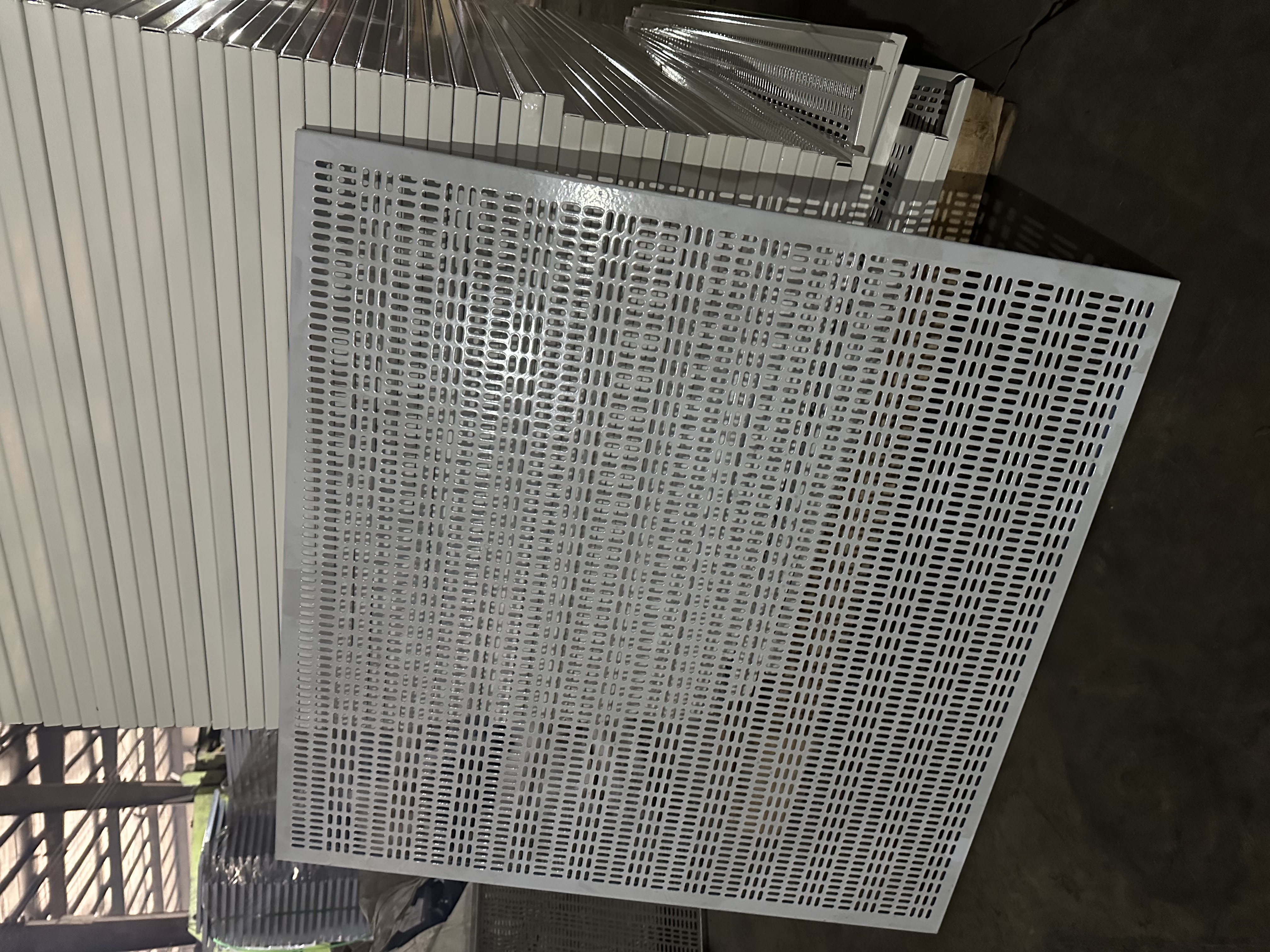
An infrastructure contractor was designing noise barriers for an urban highway extension. Working with the manufacturer's technical team, they compared aluminum 5052 and stainless steel 304 options. The aluminum solution offered weight savings for simpler mounting structures, while stainless provided better reflectivity. The chosen solution: 1.5mm 5052 aluminum honeycomb pattern at 27% open area. Panels met acoustic absorption targets, reduced structural load by 58%, and survived 10 years of outdoor exposure with minimal maintenance.
Case 3: Filtration System Redesign
A chemical processing plant using wire mesh for catalyst support encountered frequent clogging and structural failures. The plant switched to stainless steel perforated plates with 2mm diameter holes at 18% open area—from a manufacturing perspective, dramatically improving structural integrity compared to screen mesh. The rigid plate design also simplified cleaning procedures, eliminating 80% of maintenance shutdowns previously required for screen replacement.
Case 4: From Trial to Partnership
A equipment OEM initially ordered 50 prototype enclosure panels from a new supplier—Hengai Metal—to test forming accuracy and welding quality. The samples passed dimensional checks within ±0.3mm and met all vibration test criteria. Demonstrating consistency and responsiveness, the small trial order expanded to an annual volume of 5,000+ panels, and a long-term supply agreement, providing price stability and guaranteed delivery slots for the OEM's assembly line.
Expert Perspectives: Strategic Selection Considerations
Through consulting on dozens of industrial procurement decisions, I've observed several patterns worth referencing:
Pattern 1: Over-specification wastes moneyEngineers often select stainless steel for purely aesthetic reasons when coated carbon steel would genuinely serve the functional requirement. For interior architectural elements, powder-coated carbon steel delivers a satisfactory appearance at 40–50% lower cost than stainless equivalents.
Pattern 2: Under-specification is more common and more expensiveIn agricultural and mineral processing settings, frequently the initial choice is mild steel when abrasion-resistant grades would substantially extend operational life. Choosing CR or AR steel grades adds 15–25% cost initially, yet usually reduces per-ton processing cost by reducing downtime and replacement frequency.
Pattern 3: The "middleman trap"Many perforated metal suppliers don't own production facilities—they broker orders to partner factories. This creates particular risks:
Quality inspections become complicated with multiple intermediariesProduction planning shifts based on other clients' priorities
Technical guidance becomes generic because the salesperson doesn't fully understand manufacturing constraints
A recent client story illustrates this perfectly. A filtration company approached several trading companies for quotation on precision perforated cylinders. All quotes appeared similar—until one manufacturing source pointed out that a modest design modification could eliminate secondary welding steps. This reduction in handling not only lowered component cost by 12%, but also eliminated potential weld deformation issues that trading companies never considered.
Pattern 4: Lead time penalties accumulateEach supply chain layer adds 2–5 extra days. While individual delays may appear minor, they compound across projects. A manufacturer with comprehensive in-house capabilities can often compress 5–7 days off delivery estimates compared to those dependent on external subcontractors.
Practical Guidance for High-Strength, Long-Durable Applications
Based on what I've noticed working with manufacturers, here are the questions you should be asking—and the standards you should apply:
1. Define the functional requirements precisely
| Application Context | Critical Performance Attribute |
|---|---|
| Supporting weight (walkways, shelves) | Yield strength > 240 MPa for steel |
| Impact resistance (machine guards) | Elongation ≥ 20% for energy absorption |
| Abrasion (screens, classifiers) | Surface hardness, material hardness |
| Fatigue loading (vibrating equipment) | Ligament width, edge quality |
| Corrosive environment | Alloy grade, protective coating quality |
2. Request detailed manufacturing information
Beyond unit pricing, ask for:
Material test certificates showing chemical composition and mechanical propertiesMaximum hole diameter tolerance and burr height specifications
Description of deburring process employed
Available inspection equipment and quality documentation protocols
3. Validate with prototypes
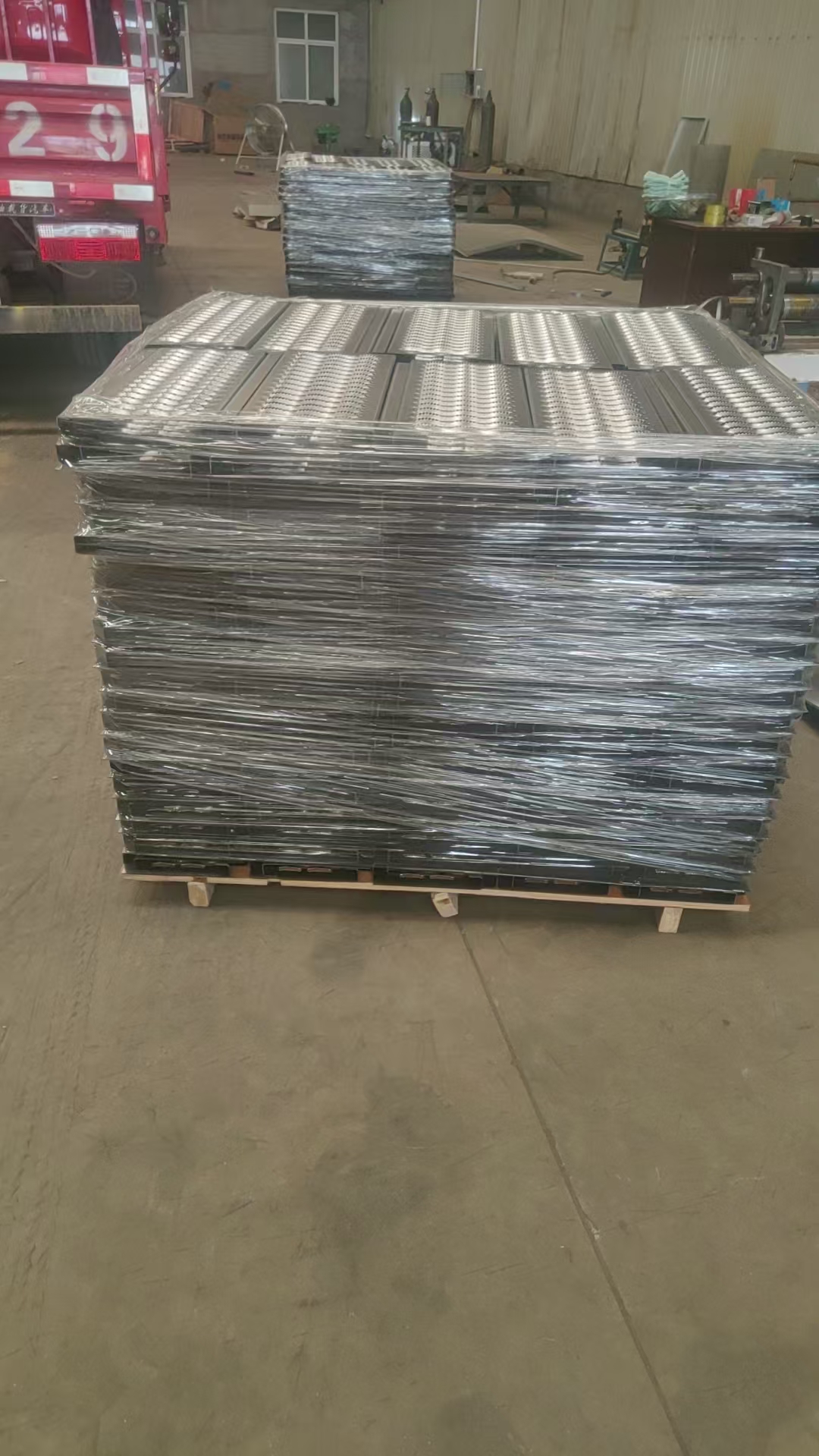
For critical applications, invest in small sample production runs (10–50 pieces) before committing to mass production. Evaluate components under real operational loading and conditions, not just visual and dimensional attributes.
4. Understand the supplier's production capacity
A genuinely capable factory should accommodate urgent needs and scaling:
Can they adjust production schedules for priority orders?What is their realistic daily output capacity?
Can they provide samples within 5–7 working days?
Do they maintain backup tooling for critical hole patterns?
The Integrated Advantage: Why Process Integration Matters
Let me tell you why I increasingly recommend clients prioritize suppliers with full process capabilities—what industry insiders call "one-stop" manufacturing. The advantages extend beyond simple cost savings:
Quality traceability: If a finished welded frame fails, a supplier who performed all steps—cutting, perforation, bending, and welding—can immediately investigate root causes. When work distributes across multiple vendors, blame cycles routinely waste weeks and undermine accountability.
Optimized scheduling: A manufacturer controlling its complete production sequence can truly accelerate urgent orders. Rather than waiting for intermittent external availability for each sequential process, they simply reschedule internal priorities.
Design refinement: Experienced in-house engineers often identify specification improvements—like suggesting a different bending radius to enhance strength, or adjusting hole arrangement to reduce stress. External traders rarely provide this level of technical input.
Take the example of a fire protection equipment manufacturer needing filter housings. They initially planned to purchase flat perforated sheets and handle bending and welding internally. After consultation, they discovered the integrated manufacturer could deliver finished housings at the same price as raw material—plus their in-house operations costs. They eliminated their requirement for additional welding infrastructure, reduced assembly time, and achieved better monthly output with an unchanged workforce.
Final Recommendation
In technical procurement, the lowest initial quote rarely equates to the lowest lifecycle cost. For applications demanding high strength and lasting durability, prioritize:
Material grade integrity—Insist on documented material certificationsManufacturing precision—Verify quality inspection equipment methods available
Structural configuration—Engineer adequate ligament widths specific to your loading
Protective finishing—Select coatings matching your environment's conditions
Rather than simply transferring design specifications blindly to multiple vendors, I recommend investing time to refine those specifications with a technically competent manufacturing partner. The optimal consulting partner listens first, understands your full application context, helps specify more effectively, then engineers a solution aligning function with cost efficiency.