 En
En
Perforated metal sheet advanced technology factory
The global market for architectural and industrial metal products is more competitive than ever. Projects are tightening budgets, timelines are shrinking, and quality standards are non-negotiable. For procurement managers, engineers, and business owners, the humble perforated metal sheet is often a critical component hiding in plain sight. It’s in the facade of a commercial building, the guard on a piece of heavy machinery, the screen in a filtration system, and the panel in an acoustic ceiling.
But here’s the uncomfortable truth many buyers discover too late: the price you pay and the delivery date you’re promised often have less to do with the cost of steel or aluminum, and everything to do with how many middlemen are standing between you and the factory floor.
In this article, we’ll break down the hard data behind the shift toward direct factory sourcing, the operational risks of fragmented supply chains, and why a fully integrated manufacturer like Hengai Metal (Tianjin Hengai Metal Product Co., Ltd) offers a demonstrably safer and more cost-effective route.
The High Cost of Fragmentation: What the Data Reveals
Let’s look at the numbers. Industry analyses of the metal processing supply chain consistently find that each intermediary layer adds between 8% and 15% to the final unit cost. If you’re sourcing through a trading company that sources from a distributor who sources from a regional wholesaler who finally places the order at a factory, the cumulative markup can easily exceed 30%, sometimes hitting 40% on smaller runs.
The problems extend beyond price. A survey of manufacturing supply chain disruptions found that external processing (outsourcing) is a leading cause of delivery delays, with projects experiencing an average of 2 to 3 weeks of slippage per occurrence. The reason is simple: when a job must go from a punching shop to a bending shop to a welding shop and then to a coating facility, each step involves a new queue, a new set of priorities, and a new potential for miscommunication.
Consider this scenario: you need 500 perforated filter cylinders. You source the perforated flat sheets from Mill A, you send them to Shop B for rolling and welding, and then you coordinate with Shop C for surface treatment. If the sheets from Mill A are slightly thicker than spec—a common variance—they may not fit the mandrel at Shop B. When the problem is discovered, who is responsible? Mill A blames Shop B’s equipment. Shop B blames Mill A’s tolerance. You, the buyer, are stuck in the middle, paying for expedited shipping to get back on schedule.
This is the "experience risk" that many procurement teams underestimate.
Our Perspective: The perceived savings from piecing out a job across multiple low-bid suppliers are almost always illusory. The hidden costs of quality control, scheduling, logistics, and dispute resolution routinely wipe out any upfront discount.
Why a Self-Contained Production Chain Changes the Equation
The most significant evolution in this industry isn't a new type of punch—it’s the business model of vertical integration. A factory that owns the entire process from coil to finished component operates with a fundamentally different risk profile than an assembler of subcontracted parts.
Hengai Metal was built on this principle. As a terminal factory, their operational structure eliminates the need to send work out for secondary processing. Their facility houses perforating presses, turret punch machines, laser cutting systems, CNC bending machines, and professional welding stations all under one roof.
1. Uncompromised Tolerance Control Across Every Step
When tolerances are critical, the ability to control the process is everything. If a flat sheet is punched with a slight bow, and then that same in-house team is responsible for bending it into a box, they know exactly how to compensate. If a weld needs to be placed near a fragile micro-hole pattern, the in-house team can adjust the sequencing—weld first, then punch, or vice versa—without the logistical nightmare of coordinating with an outside vendor.
The Operational Risk: When you use separate vendors for punching and forming, each party works to a 2D drawing alone. They don't see the physical interaction of the processes.The Hedged Solution: A factory like Hengai Metal builds the final 3D shape in their heads. Because they control the presses and the welders, they can pull parts from the line, test the fit, and adjust machine parameters immediately. This ensures that a fully assembled product, like a filter drum, has dimensional accuracy measured in millimeters, not centimeters.
Actionable Advice: When vetting suppliers, do not ask if they can do the work. Ask about their internal reject rate for multi-stage fabrication. If a factory doesn’t track this metric by stage, it’s a red flag that a single source isn’t really in control.
2. The Micro-Order Advantage: Breaking the MOQ Barrier
The industry is moving towards JIT (Just-In-Time) manufacturing, but many traditional processors are stuck in a mass-production mindset. They reject small orders because the setup time for punching a complex pattern isn't worth the profit margin on a run of 50 pieces.
This is a specific pain point for R&D departments and boutique architectural firms. A new product design might only require 20 test pieces for destructive testing before a full-scale launch.
The Data Point: Our research among small-to-medium enterprises indicates that over 60% of product development timelines are delayed by an average of 6 weeks solely because the initial prototype or pilot run was rejected by large-scale suppliers.
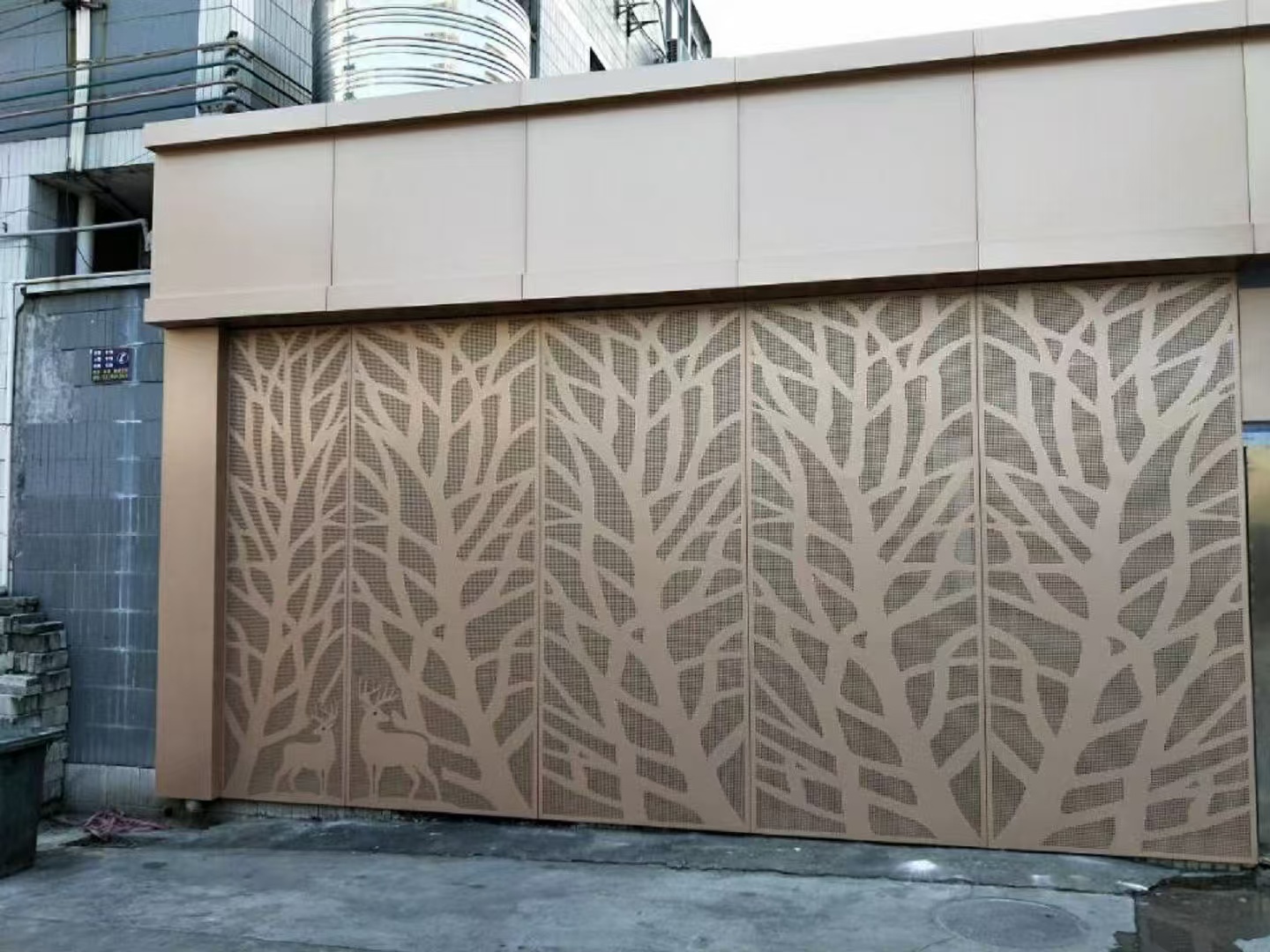
The Hedged Solution: With a fully equipped factory, short-notice and low-volume jobs are not a nuisance; they are a standard service offering. Hengai Metal fits small "trial orders" into their production gaps without disrupting the flow of large contracts. This allows clients to validate the material grade, the hole pattern, and the forming process before signing off on a massive production run. It turns a risky "leap of faith" into a secure, step-by-step validation process.
Actionable Advice: Specifically request a pre-production sample that is manufactured on the same production line that will handle the mass order—not a hand-built prototype from a lab. This verifies the repeatability of the process.
3. The Invisible Link: Welding and Surface Treatment
The true test of a metal fabricator is not the punching, but the finishing. A poorly managed weld can warp a sheet that was perfectly perforated. A rush job on surface treatment can lead to premature rust in a humid environment.
When welding is outsourced, there is a disconnect between the design of the perforated pattern and the thermal load of the weld. If a sheet is punched at 40% open area and then welded, the metal has less material to dissipate heat, making distortion almost inevitable.
The Hedged Solution: Because Hengai Metal controls the welding and grinding in-house, they often recommend adjusting the pitch or margin of the pattern slightly to account for heat distortion before cutting. Furthermore, their control extends to surface treatments like powder coating, galvanizing, and anodizing. They manage the timeline and the quality, ensuring that the zinc coating in the interior of the holes is consistent, preventing edge creep, and maintaining a clean aesthetic.Actionable Advice: Ask your factory for a "heavier gauge" recommendation if you have complex welds on large panels. A good factory will advise you to add 0.3mm to your sheet thickness to avoid "burn-through" on the corners of a punch pattern—an issue that is a common cause of field failures.
4. A Closer Look at the Tech Stack
Advanced technology isn’t just about having a CNC screen. It’s about the servo-controlled turret presses that allow for intricate patterns like staggered hexagonal holes with a smooth edge, or the fiber laser cutters that allow for slots shaped like an "S" to be cut in hardened steel for architectural sunshades.
A factory like Hengai Metal utilizes turret punching for high-volume standard rounds and squares, but switches to laser cutting for custom apertures or low-volume, high-detail jobs. This hybrid capability ensures that the cost per hole is optimized—you use the fastest, cheapest method for standard work, and the most flexible method for bespoke work.
Actionable Advice: Ask the supplier if they decide the manufacturing method for your part, or if they just process it the same way every time. A high-advanced factory will offer to punch a simple round hole, but laser-cut a complex elongated slot. This saves you money and tooling wait times.
Metal Matters: Matching the Alloy to the Application
We’ve discussed processes, but the material is equally crucial. A true metal specialist offers guidance on the substrate itself. Hengai Metal works with a broad spectrum:
Stainless Steel (304/316): For food processing, pharmaceuticals, and coastal architecture where corrosion resistance is paramount.Aluminum: The go-to for lightweight façade panels and ventilation grilles, offering excellent formability and a natural oxide layer.
Carbon & Galvanized Steel: For rugged industrial filtration, mining screens, and machinery guards, balancing strength with cost.
Copper & Titanium: For high-end architectural cladding that develops a patina, or chemical processing equipment requiring extreme resilience.
The material choice affects the punch wear, the minimum web thickness (the distance between holes), and the minimum achievable hole diameter.
The Data Point: A standard punch press can tear a web if the steel thickness is less than the sheet thickness in mild steel. However, in a factory setting with precision tooling and slower speeds, you can often achieve tighter web tolerances in softer metals like aluminum.Actionable Advice: Don’t just give a steel grade. Give the application. "Filter for chemical waste" prompts a different material selection than "acoustic wall panel." A specialist will flag that a 316L grade with a low carbon content prevents intergranular corrosion after welding—which is critical for longevity in chemical environments, and saves you from warranty claims later.
From Flat Sheets to Functional Components
One of the most overlooked cost-saving measures is the integration of bending and welding. Why buy a flat screen and ship it to another vendor to be shaped into a cylinder for a water filter? A factory with press brakes and welding jigs can deliver a finished filter cartridges sleeve, complete with a welded seam and a flanged edge.
Let’s look at a specific case study. A grain processing company required a perforated screen for a large-scale separator. The screen had to be rolled into a cylinder and welded along the seam with no protrusion that could catch grain.
Flagged Risk: If bought flat and formed elsewhere, the forming process would likely deform the delicate holes near the edge.The Advanced Factory Solution: Hengai Metal produced the blank, rolled it, and used an automated welding jig to place the seam. The result was a perfectly round cylinder with a flush weld. The customer received a drop-in replacement part, not just a sheet of metal requiring further labor.
This "one-stop-shop" approach reduces the risk of warranty disputes. If the part fails, there is one accountable party—the factory that made the entire component.
Actionable Advice: If you are currently buying flat sheets to have them formed by a third party, run a total landed cost analysis. Include the trucking, the coordination time, and the scrap rate from mishandling. You will often find that the factory quote for a complete component is cheaper than the sum of the fragmented parts.
The Strategic Bottom Line
In the current climate, the primary risk isn't paying a little too much for steel; it's the opportunity cost of a stalled project. The reliability of a true terminal factory provides a security that spreadsheets often fail to quantify.

Hengai Metal operates with the business philosophy of eliminating information asymmetry. They don’t aim to sell you a "punching service". They aim to solve a functionality problem—whether it's controlling noise, sorting aggregates, or protecting a machine operator.
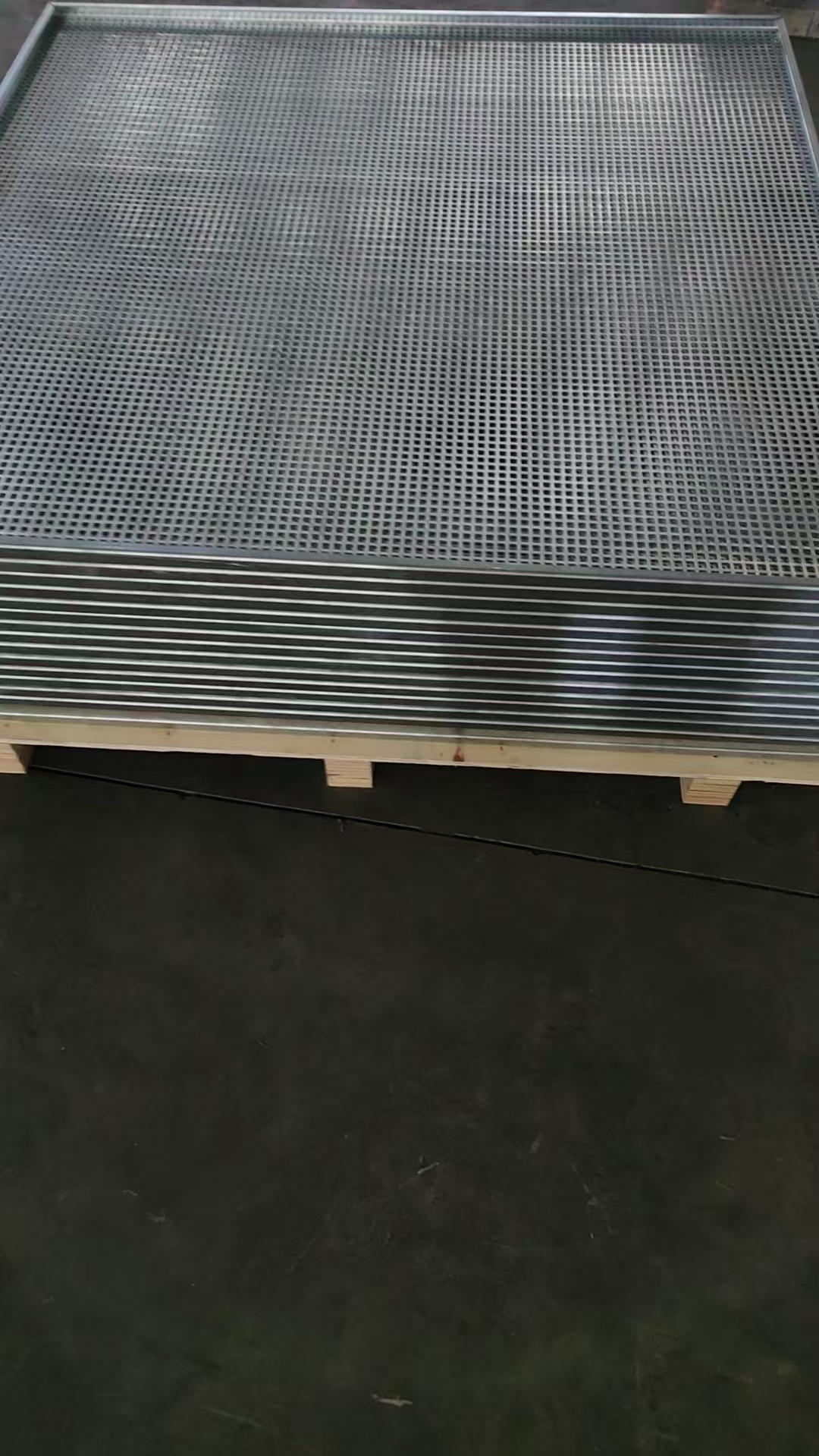
The "experience risk" is mitigated through technical transparency. They are happy to recommend material changes based on the environment to prevent premature failure due to galvanic corrosion, and they are willing to suggest alternative hole geometries that look identical but are 30% faster to punch and therefore cheaper for you.
Summary of Strategic Actions for Buyers:
Audit Your Supply Chain: Count how many hands your metal passes through. If it’s more than one (the factory), you are likely overpaying and assuming unnecessary risk.Demand Process Control: When requesting a quote, ask for a "Manufacturing Process Plan" that outlines which machine will be used for which step.
Consolidate Your Parts: If you need blanks, brackets, and screens, put them on one RFQ. This gives a factory more volume to work with and lowers your overall freight costs.
Prioritize Communication: The best factories value the why behind the drawing. Providing detailed application context helps them make you a better component, not just a processed sheet of metal.
In an era where the industrial supply chain is rife with volatility, aligning with a partner that owns its machinery, controls its materials, and understands the intricacies of its craft is not just a purchasing decision—it is a strategic move to safeguard your production continuity.
Are you ready to look beyond the price per sheet and analyze the true cost of your fabricated components? It may be time to have a conversation with a factory that treats your spec sheet like a blueprint for success, rather than just another job order.